🌿 Your trusted guide to choosing the best garden tools.

Warren Hoe: The Complete Guide to Uses, Anatomy, and Buying Tips

Ever stood in a garden aisle staring at a wall of hoes, wondering which pointy, arrow-headed tool actually does what you need? You’re not alone. The Warren hoe is one of the most useful — and most misunderstood — tools in the garden shed. It’s not your average flat-bladed hoe, and it’s definitely not the same as a stirrup hoe, even though some stores mix the two up.
If you’ve ever wanted a single hand tool that can cut a clean furrow for seeds, cultivate soil between tight rows, hill soil over young seedlings, and dig up potatoes at harvest time, keep reading. This guide covers everything you need to know about the Warren hoe: what it is, how it’s built, who it’s for, how to pick the right one, and how to use it correctly so it lasts for decades.
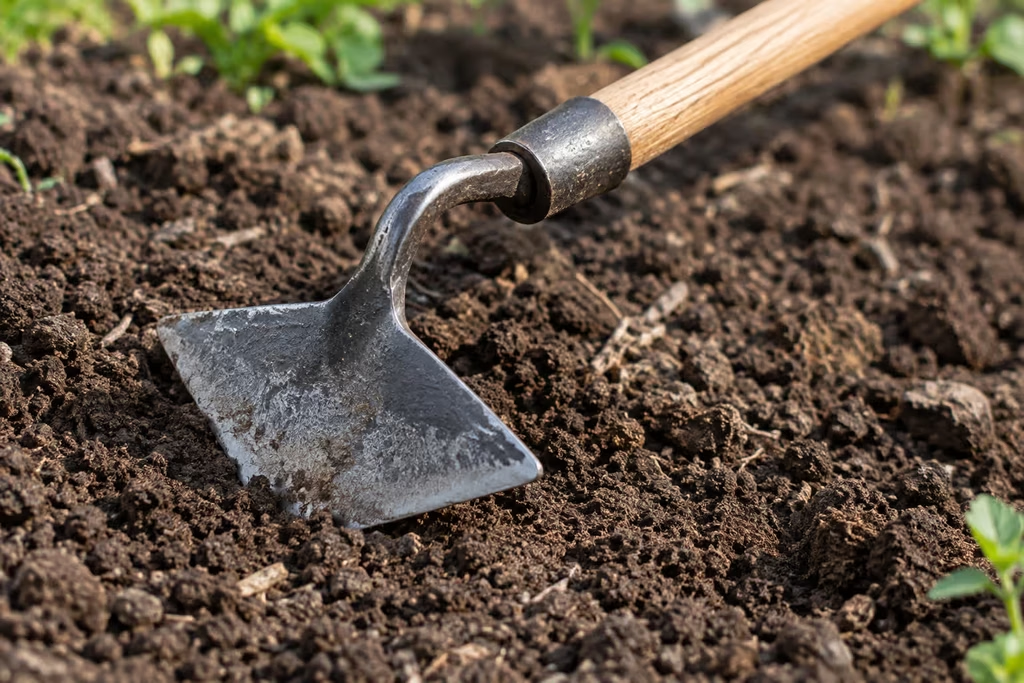
A Warren Hoe Resting on Garden Soil
What Is a Warren Hoe?
A Warren hoe is a hand-forged garden hoe with a triangular, arrow-shaped (or heart-shaped) blade mounted at an angle on a long handle. The pointed tip and two angled sides — sometimes called “ears” or “wings” — set it apart from flat hoes, draw hoes, and stirrup hoes.
That triangular head is what makes the Warren hoe so versatile. The point digs a narrow furrow (also called a drill) for sowing seeds at a consistent depth. Once seeds are in, you flip the tool around and use the flat back edge or the angled “ears” to pull soil back over the row — a step gardeners call hilling or backfilling. The same point and edges also work for shallow cultivation between plants, slicing weeds just below the soil surface without disturbing root systems nearby.
You’ll find the Warren hoe sold under names like the AMES Warren hoe, the Bully Tools Warren hoe, the Craftsman planting hoe, the UnionTools Warren hoe, and the hand-forged Sneeboer Warren hoe. Some brands also describe it as an “arrowhead hoe” or “planting hoe” because of its shape and primary use case: opening and closing furrows for planting.
A quick clarification worth knowing: several retail listings incorrectly group the Warren hoe together with the stirrup (shuffle) hoe because both are marketed as “weeding hoes.” They are not the same tool. A stirrup hoe has a loop-shaped blade that oscillates back and forth on a hinge to slice weeds at the roots on the push and the pull. A Warren hoe has a fixed, solid triangular blade and is primarily a furrowing and cultivating tool that also happens to weed well in tight spaces. Knowing this difference will save you from buying the wrong tool for the job.
Warren Hoe vs. Other Common Garden Hoes
| Feature | Warren Hoe | Draw Hoe | Dutch (Push) Hoe | Stirrup Hoe |
|---|---|---|---|---|
| Blade shape | Triangular/arrow-shaped, pointed tip | Flat, rectangular blade at an angle | Flat blade, sits nearly parallel to soil | Loop-shaped, hinged, oscillating |
| Best for | Furrowing, hilling, tight-space cultivation | Chopping, mounding, breaking clumps | Slicing weeds just under the surface | Fast weeding over open beds |
| Motion | Pull toward you (furrow/chop) | Pull/chop, downward strike | Push forward, skimming motion | Push-and-pull, back-and-forth |
| Precision | High — narrow point for exact rows | Medium | Low — wide, sweeping | Medium |
| Good for weeding? | Yes, in narrow spaces | Yes, but disruptive to soil | Yes, very efficient | Yes, its main job |
| Good for planting rows? | Excellent | Not ideal | Not ideal | No |
Warren Hoe Compared to a Draw Hoe and Dutch Hoe

Anatomy of a Warren Hoe
Understanding the parts of a Warren hoe helps you judge quality when shopping and use the tool correctly once you own one.
- Blade (head): The triangular, arrow-shaped working end, usually forged from high-carbon or stainless steel. Widths typically range from about 4.5 to 7 inches.
- Point: The sharp tip at the front of the blade, used to break ground and cut a furrow.
- Ears (wings): The two angled edges flaring back from the point; these pull loosened soil back over a planted row.
- Ferrule or socket: The metal collar or tang connecting the blade to the handle. A steel ferrule generally holds up better than a simple tang-and-rivet joint.
- Handle: Usually 48 to 60 inches of hardwood (often ash or hickory) or fiberglass, letting you work standing upright instead of bending.
- Grip: Some models add a cushioned or rubberized end grip for comfort during long sessions.
What Is a Warren Hoe Used For?
- Cutting furrows (drills): The pointed blade digs a clean, consistent trench for sowing seeds like beans, carrots, or corn.
- Hilling and backfilling: The angled ears pull soil back over seeds or mound it around the base of plants like potatoes and leeks.
- Cultivating between rows: The narrow head slips into tight spaces between plants without damaging nearby roots or stems.
- Light weeding: The point and edges can slice small weeds just under the soil surface in confined areas where a wider hoe won’t fit.
- Harvesting root vegetables: Many gardeners use it to loosen soil around potatoes, celery, leeks, and asparagus at harvest time.
- Making planting furrows for transplants: A quick pass creates a shallow trench for setting in seedlings at a uniform depth.
Who Should Use a Warren Hoe?
- Vegetable and row-crop gardeners who plant seeds directly in the ground and need consistent furrow depth.
- Small-scale and homestead growers who want one tool that handles furrowing, hilling, and light cultivation instead of switching between several hoes.
- Raised bed and narrow-row gardeners who need a precise tool that fits between closely spaced plants.
- Root vegetable growers (potatoes, leeks, celery, asparagus) who need to hill soil during the season and loosen it at harvest.
- Anyone tired of bending over with a hand trowel — the long handle lets you furrow and weed standing up, which is easier on the back and knees.
Using a Warren Hoe to Cut a Planting Furrow

How to Choose the Right Warren Hoe
- Check the blade width for your rows. A narrower blade (around 4.5–5 inches) suits tight raised beds and closely spaced plants; a wider blade (6–7 inches) moves more soil faster in open rows.
- Look at the blade material. High-carbon steel holds an edge well and is easy to sharpen; stainless steel resists rust better in humid climates but may need sharpening more often.
- Decide between a welded head and a forged head. Forged, one-piece construction (like Sneeboer’s hand-forged models) tends to be stronger and longer-lasting than a welded head, though it usually costs more.
- Match the handle length to your height. A handle around 54–58 inches lets most adults work standing without excessive bending; shorter handles suit smaller garden beds or gardeners who prefer more control.
- Compare handle materials. Hardwood (ash or hickory) feels traditional and absorbs shock well; fiberglass resists splintering, weather damage, and is often lighter.
- Check how the head attaches to the handle. A steel ferrule or full tang secured with rivets is more durable than a thin socket that can loosen over time.
- Consider the grip. A cushioned or rubberized end grip reduces hand fatigue if you’re using the tool for extended sessions.
- Factor in your soil type. Heavier clay soils benefit from a thicker, more rigid blade; sandy or loamy soils work fine with lighter blades.
- Set a budget based on how often you’ll use it. Occasional gardeners can do well with a mid-range welded model (around $20–$50); market gardeners and daily users may prefer a premium hand-forged option built to last for decades.
How to Use a Warren Hoe: Step-by-Step
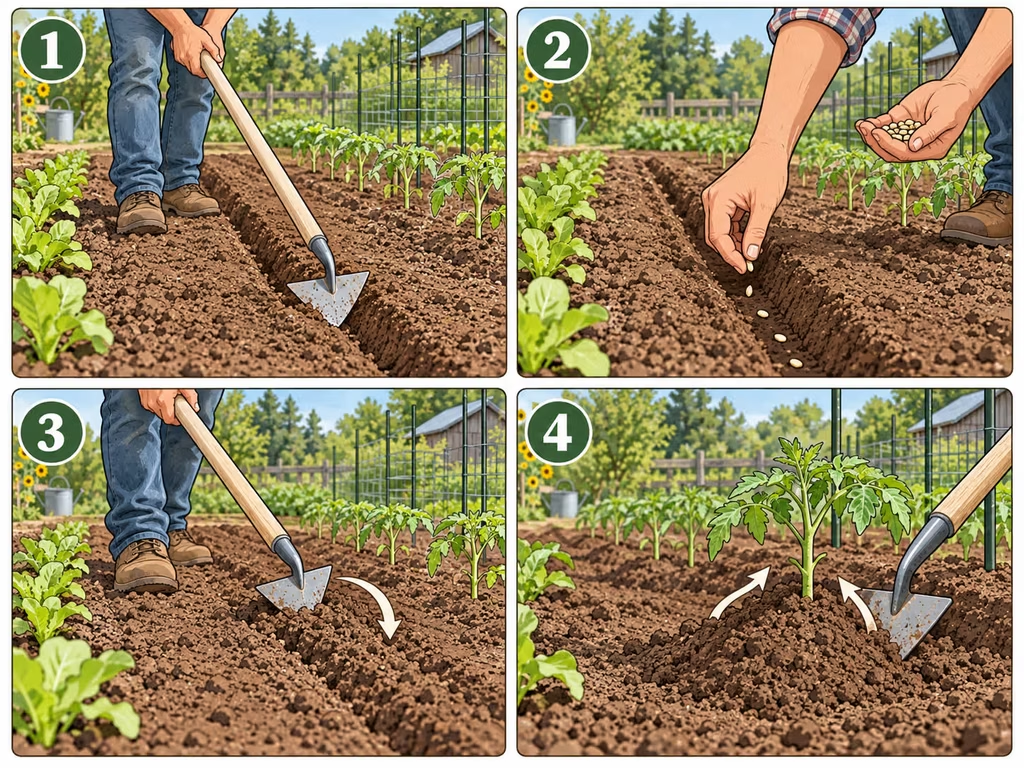
- Choose your grip and stance. Hold the handle with both hands, one near the top and one about a third of the way down, standing upright with feet shoulder-width apart.
- Mark your row. Use a string line or the edge of a bed to keep your furrow straight, especially for seeds that need even spacing.
- Pull the point through the soil. Angle the blade’s point slightly into the ground and pull it toward you in a smooth, steady motion to cut a shallow furrow at your desired depth.
- Check furrow depth. Most seed packets specify depth; a Warren hoe’s point makes it easy to keep furrows consistent along the whole row.
- Sow your seeds. Drop seeds into the furrow at the recommended spacing.
- Flip and backfill. Turn the hoe so the flat ears face forward, then draw it back over the furrow to pull soil over the seeds and gently firm it down.
- Cultivate between rows as plants grow. Use short, shallow strokes with the point or edge to break up surface crust and slice young weeds without disturbing roots.
- Hill soil around growing plants. For potatoes and similar crops, use the flat ears to mound soil up around the base of stems as they grow taller.
- Harvest with care. At harvest time, use the point to loosen soil gently around root vegetables before lifting them by hand.
Table of Contents
Step-by-Step Warren Hoe Technique in the Garden
Maintenance and Care Tips
- Clean after every use. Knock or brush off wet soil before storing; caked-on dirt traps moisture against the metal and speeds up rust.
- Dry the blade thoroughly. Wipe with a dry cloth, especially after use in damp soil or rain.
- Oil the steel regularly. A light coat of boiled linseed oil or a specialty tool oil on a carbon-steel blade prevents rust between uses.
- Sharpen the edges periodically. A flat file or sharpening stone keeps the point and edges cutting cleanly through soil and small weeds instead of dragging.
- Condition wooden handles. Rub boiled linseed oil into a hardwood handle once or twice a season to prevent drying, cracking, and splintering.
- Check the head-to-handle joint. Tighten any loose rivets or wedges before the head can wobble or separate during use.
- Store off the ground, indoors if possible. Hanging tools on a wall rack or shed hook keeps blades dry and out of standing water or snow.
- Inspect fiberglass handles for surface damage. Small nicks in the polyester coating can let moisture in over time; a light sanding and recoat extends handle life.
Common Mistakes to Avoid
- Using it like a chopping hoe. The Warren hoe is built for pulling and pointed work, not heavy downward strikes — that stresses the head-to-handle joint and can loosen or crack it.
- Digging furrows too deep for the seed. Going deeper than the seed packet recommends can delay or prevent germination.
- Skipping the backfill step. Leaving seeds exposed in an open furrow invites birds, drying wind, and uneven germination.
- Ignoring blade sharpness. A dull point drags through soil instead of cutting cleanly, making furrows uneven and weeding less effective.
- Storing it wet. Leaving a damp blade in a shed overnight is one of the fastest ways to start surface rust.
- Choosing too wide a blade for narrow beds. An oversized head can damage neighboring plants when you’re cultivating tight rows.
- Forcing it through compacted or rocky soil. Prying against a rock with the point can bend the blade or snap a wooden handle; loosen tough ground first with a fork or mattock.
Frequently Asked Questions
Is a Warren hoe the same as a stirrup hoe? No. A Warren hoe has a fixed, solid, arrow-shaped blade used mainly for furrowing, hilling, and cultivating. A stirrup hoe has a hinged, loop-shaped blade that oscillates back and forth and is used mainly for cutting weeds at the soil surface. Some retailers list them together, but they work differently.
What is a Warren hoe good for? It’s best known for cutting furrows for planting seeds, backfilling soil over those furrows, cultivating soil between closely spaced plants, light weeding in tight areas, and hilling soil around crops like potatoes.
How do you use a Warren hoe to plant seeds? Pull the pointed blade through the soil to cut a furrow at the correct depth for your seeds, sow the seeds into the furrow, then flip the hoe around and use the flat edge or ears to pull soil back over the row.
What’s the difference between a Warren hoe and a draw hoe? A draw hoe has a flat, rectangular blade set at an angle and is generally used for chopping weeds and breaking up soil clumps. A Warren hoe has a pointed triangular blade designed more specifically for furrowing and precision cultivation.
What material is best for a Warren hoe blade? High-carbon steel is a common choice because it holds a sharp edge and is easy to resharpen. Stainless steel is a good option if you garden in a humid climate and want extra rust resistance, though it may need touch-up sharpening more often.
Can a Warren hoe be used for weeding? Yes, though it’s not its primary purpose. The point and edges can slice small weeds in tight spaces between plants, but a dedicated stirrup or Dutch hoe will generally weed larger open areas faster.
How long does a Warren hoe last? With regular cleaning, oiling, and proper storage, a quality forged Warren hoe with a hardwood or fiberglass handle can easily last 10–20 years or longer, especially hand-forged models built with thicker steel.
Where can I buy a Warren hoe? Warren hoes are widely available from hardware retailers like Ace Hardware, Tractor Supply, and Lowe’s, as well as from garden tool specialists and brands such as AMES, Bully Tools, Craftsman, UnionTools, and Sneeboer.
A Collection of Warren Hoes from Different Brands

Final Thoughts
The Warren hoe earns its place in the garden shed because it does several jobs well instead of one job perfectly. Its pointed, arrow-shaped blade cuts clean furrows, its angled ears backfill and hill soil, and its long handle lets you cultivate and weed tight rows without constant bending. Whether you’re planting a row of beans, hilling potatoes, or tidying up between seedlings, a well-chosen Warren hoe — matched to your soil, your row spacing, and your height — can quickly become one of the most-reached-for tools you own.
Take care of it with regular cleaning, occasional sharpening, and proper storage, and a good Warren hoe will likely outlast several seasons of harder-use tools in your shed.