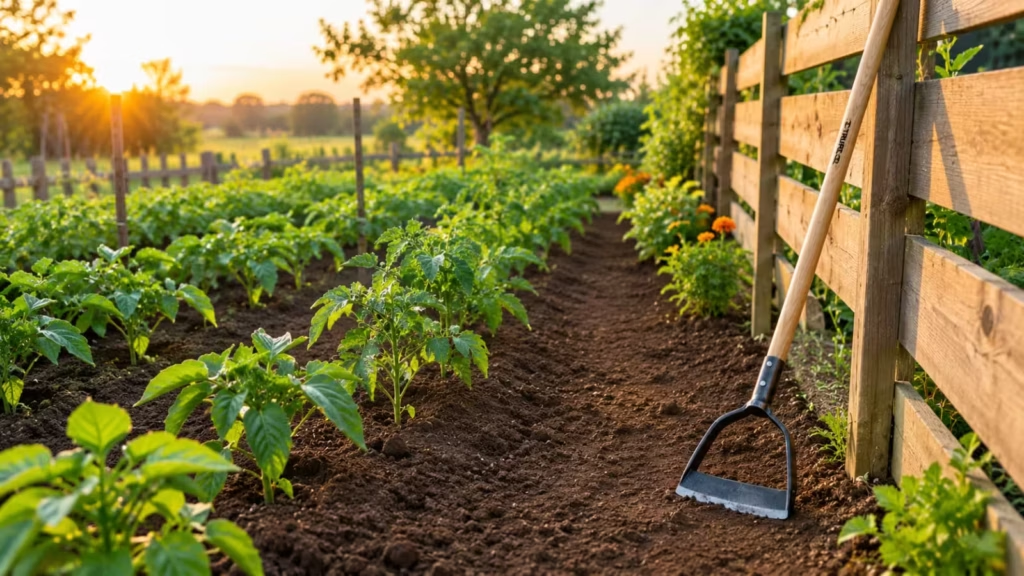
🌿 Your trusted guide to choosing the best garden tools.

Stirrup Hoe: The Oscillating Weeder That Stands Between You and a Backache

Why does hand weeding always take twice as long as you planned?
If your knees, back or patience have had enough of kneeling in the dirt, there is a tool built specifically to fix that: the stirrup hoe. Shaped like a horse’s stirrup, it swings gently back and forth just under the soil, slicing weeds off at the root while you stand tall and walk down the row.
It goes by several names, including the oscillating hoe, hula hoe, action hoe, loop hoe and scuffle hoe, and it has become one of the most searched weeding tools for a reason: it genuinely works, and it’s inexpensive enough for almost any garden budget.
Here’s what you’ll find in this guide:
- what a stirrup hoe is and how the “oscillating” blade actually moves
- how it compares with Dutch hoes, draw hoes and precision cultivators
- how to pick between brands like Hoss and Craftsman, and where to buy one (Lowe’s, Home Depot or a specialist store)
- exactly how to use it, step by step
- how to maintain the blade so it keeps cutting cleanly for years
Let’s get your weeding time down to minutes instead of hours.
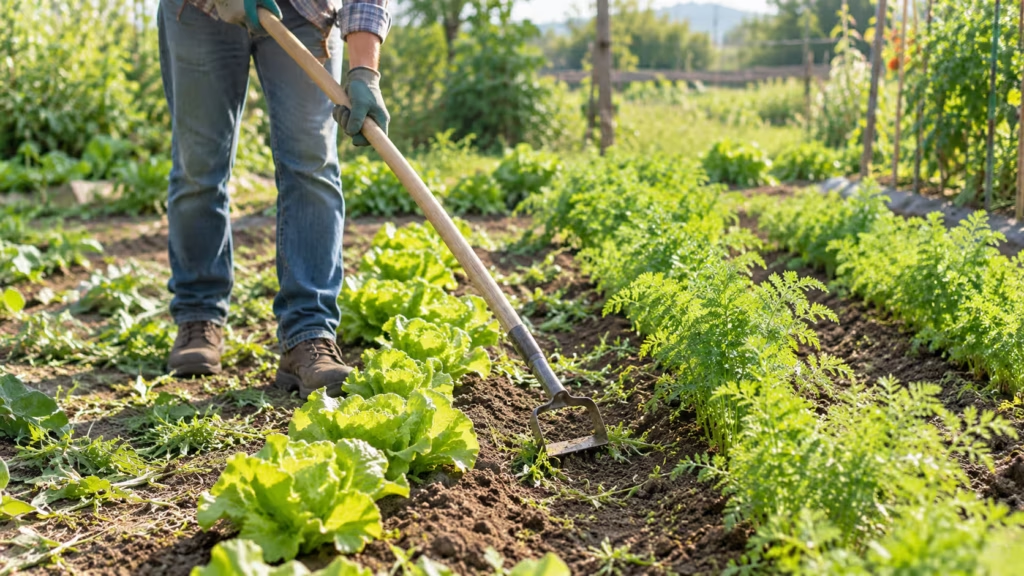
Gardener Using a Stirrup Hoe to Weed Between Vegetable Rows
What Is a Stirrup Hoe?
A stirrup hoe is a long-handled weeding tool with a thin, U-shaped (or sometimes triangular) metal loop mounted at the end. Because the loop is hinged, it rocks or “oscillates” a few degrees as you push and pull it, letting the sharpened front and back edges both cut through weeds just beneath the surface.
Gardening Know How describes stirrup hoes as also being called action hoes, scuffle hoes or loop hoes, and notes that they cut weeds out at the root below the top layer of soil while letting you stand upright to weed. Neversink Tools adds that the tool works especially well on established, stubborn weeds such as grass and perennials, though cutting the root without removing it means tougher weeds can regrow.
Unlike a fixed-blade Dutch or draw hoe, the stirrup’s hinge means you don’t have to reposition your wrist for each direction. Slide it forward, pull it back, and both strokes cut.
want to know about blade angle
Why “Oscillating”?
The blade sits inside a slotted frame that lets it tilt roughly 20 degrees in either direction. As you push, the blade angles one way to slice; as you pull, it flips to slice the other way. This oscillation is what separates a true stirrup hoe from a fixed hula-style scraper, and it’s also why some sellers use “oscillating hoe” and “stirrup hoe” interchangeably.
Stirrup Hoe vs Other Weeding Tools
| Feature | Stirrup Hoe | Dutch/Push Hoe | Draw Hoe | Collinear/Precision Hoe |
|---|---|---|---|---|
| Blade motion | Oscillates on push and pull | Mostly push, some pull | Pull toward you | Push, very shallow |
| Best for | Established or medium weeds, grass clumps | Seedling weeds, light soil | Chopping, furrows, hilling | Tiny thread-stage weeds |
| Posture | Upright | Upright | Bent, chopping | Upright |
| Aggressiveness | Moderate to high | Low to moderate | High | Very low |
| Works in compacted soil | Fairly well | Only with toothed blades | Yes | Poorly |
| Good near seedlings/crops | Moderate care needed | Good | Risky | Best precision |
| Typical price range | Low to mid | Low to premium | Low to mid | Mid to high |
In short: reach for the stirrup hoe when weeds have already grown past the seedling stage, and switch to a precision or Dutch hoe once the bed is under control and you only need to catch tiny new sprouts.
Anatomy of a Stirrup Hoe
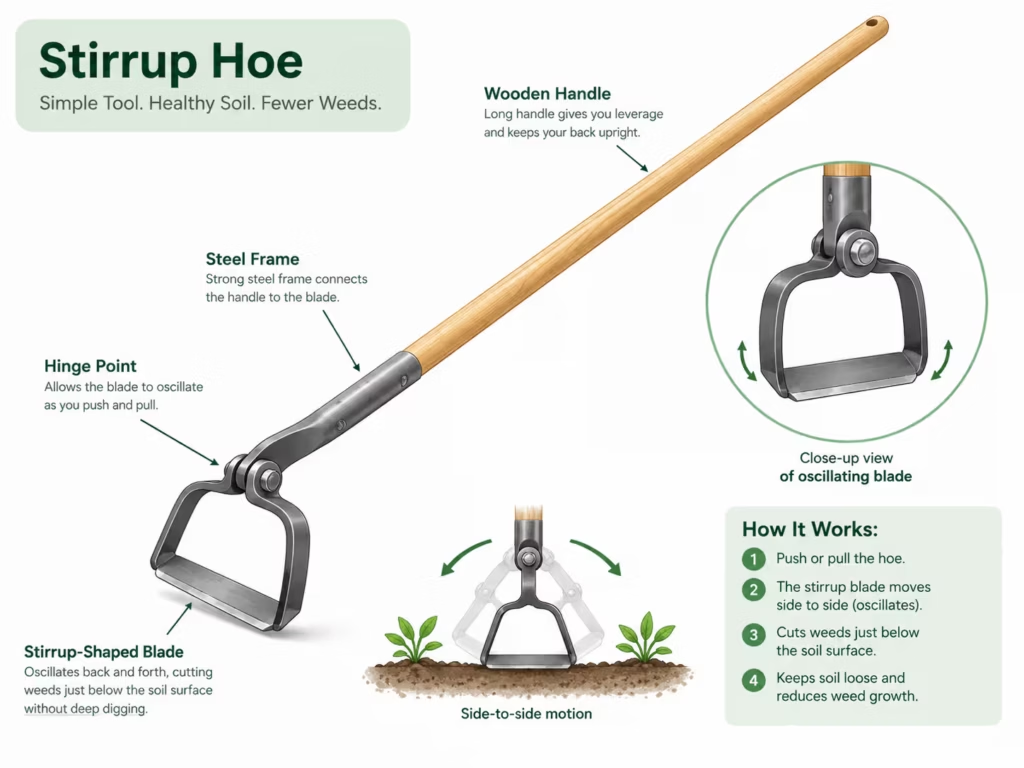
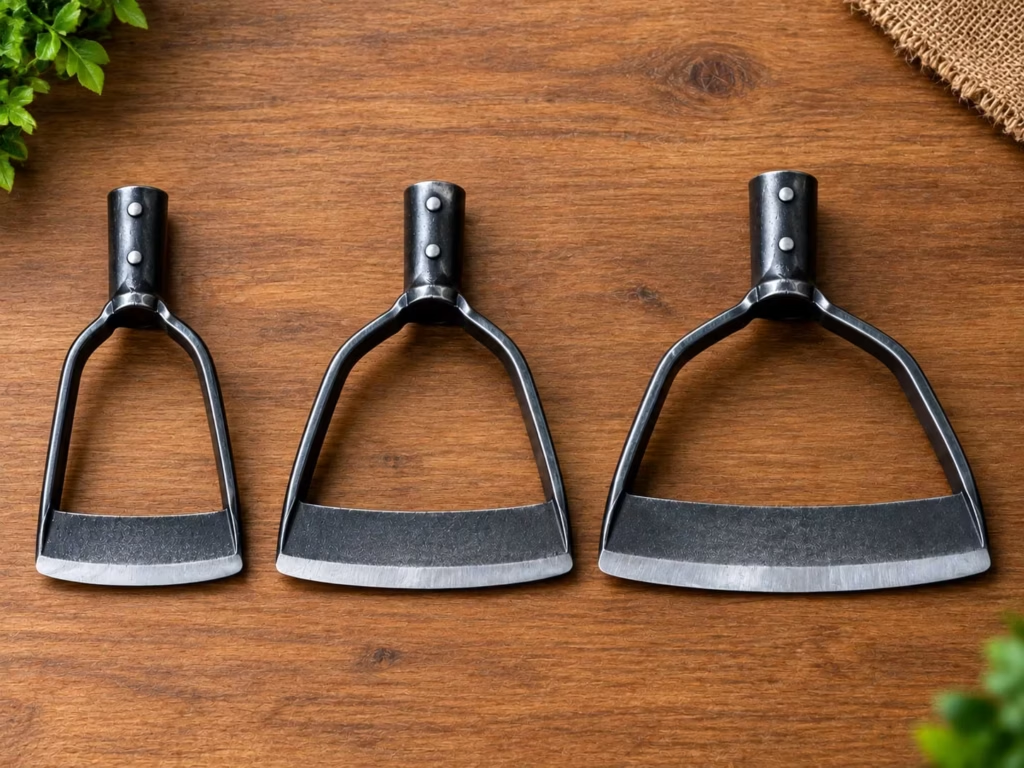
Blade (loop). A thin strip of spring steel bent into a stirrup, D or triangular shape. Widths commonly range from about 3 to 12 inches, with 6 to 8 inches being the most popular for garden rows.
Hinge/pivot. The point where the blade attaches to the frame. This is what allows the 15 to 20 degree back-and-forth swing.
Frame. A metal yoke, often powder-coated steel, that holds the blade and connects it to the handle.
Handle. Usually a long wooden shaft (ash is common), though some models use fiberglass or steel. Length typically runs from about 48 to 60 inches so you can work while standing.
Grip. Many modern models add a cushioned or D-shaped grip to reduce hand fatigue during long sessions.
Replaceable blade. A genuine advantage of this design: the spring-steel blade is often removable and can be swapped out or resharpened when it wears down.
Labeled Diagram of a Stirrup Hoe’s Parts
What Is a Stirrup Hoe Used For?
Clearing established weeds. The oscillating action makes quick work of weeds that have grown past the seedling stage, including grass clumps in beds.
Weeding between rows. Narrower 3 to 6 inch blades slip between closely spaced vegetable rows without harming crops.
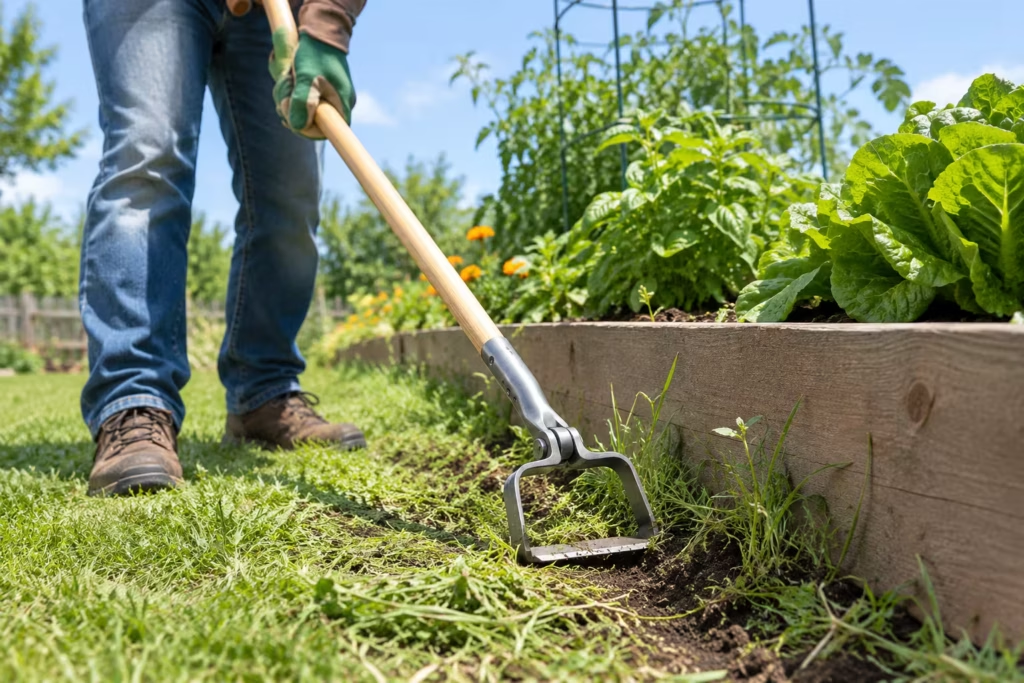
Edging garden beds. Shuffling the hoe along a bed’s border helps stop grass runners from creeping in.
Clearing old crops. Some growers use a stirrup hoe to cut down spent crops like spinach or lettuce before replanting a bed.
Aerating light soil. The wiggling motion of the blade also loosens the top layer of soil slightly as it cuts.
Maintaining paths and open ground. A wider 8 to 12 inch blade covers open dirt paths quickly, though it isn’t meant for removing turf.
What a Stirrup Hoe Cannot Do
- It is not designed to remove sod or established turf.
- Wider blades (around 12 inches) struggle in hard or clay soil; narrower blades handle that better.
- It cuts roots rather than pulling them, so persistent perennial weeds can regrow and may need follow-up with a fork or precision cultivator.
- It’s not ideal once you’re only dealing with tiny, thread-stage seedlings; a collinear or wire weeder is gentler and more precise at that stage.
Who Should Use a Stirrup Hoe?
You’ll probably get the most out of this tool if you:
- Have a vegetable garden with rows or raised beds and want fast row maintenance
- Deal with medium-to-large weeds and grass clumps, not just seedlings
- Have back, knee, or arthritis issues and need to stay upright while working
- Want a budget-friendly, low-maintenance tool that’s easy to find at hardware stores
- Manage a bigger plot or allotment where hand-pulling everything takes too long
If your garden is mostly fine seedling weeds in soft soil, a lighter Dutch or collinear hoe may suit you better; if your ground is heavily compacted clay, a draw hoe or mattock will get through it more easily.
Stirrup Hoe Clearing Grass and Weeds Along a Garden Bed Edge
Popular Stirrup Hoe Brands and Where to Buy One
Searches for Hoss stirrup hoe, Craftsman stirrup hoe, Lowe’s stirrup hoe and Home Depot stirrup hoe show that most buyers are comparing a small handful of well-known options.
Hoss Stirrup Hoe
Hoss, known primarily for its wheel hoe systems, also sells a standalone hand-tool version. Product listings describe a 6-inch dual-sided spring-steel blade that oscillates 20 degrees in either direction, mounted on a 60-inch waxed ash handle with a powder-coated steel frame, and marketed as made in the USA. It’s built to work as a precision tool close to plants as well as a heavier-duty option for clearing large weedy patches. Buyer reviews are largely positive, praising the sharp blade and the comfort of the ash handle, though a few reviewers have noted the price is high for what is, at its core, a similar mechanism to cheaper hardware-store versions.
Hoss also makes a wheel-hoe attachment version of the oscillating stirrup hoe, sold separately from the wheel hoe itself, in 6, 8 and 12 inch widths for gardeners who want to cover ground while walking behind a wheeled frame rather than swinging a hand tool.
Craftsman Stirrup Hoe
Craftsman’s stirrup hoe, sold through retailers like Lowe’s, is one of the most widely available versions in the US. Gardening Know How describes a 54-inch model with a sturdy steel loop and a cushioned grip designed to reduce hand fatigue, and highlights it as an accessible, affordable way to try the tool for the first time.
Lowe’s and Home Depot Stirrup Hoes
Both Lowe’s and Home Depot typically stock stirrup hoes from major hand-tool brands, including Craftsman and other budget and mid-range lines. Because exact models and pricing change by season and location, it’s worth checking current in-store or online stock before making a special trip, and comparing blade width and handle length against what your garden actually needs.
Specialty and Boutique Options
Smaller makers, including some European and artisan brands, sell shorter, hand-held “stirrup hand hoes” with stainless-steel blades and hardwood handles, aimed at close-in weeding rather than standing work. These trade the long-reach convenience of a full-length stirrup hoe for more control in tight spaces like containers or between delicate seedlings.
Comparing a Long-Handled Hoss Stirrup Hoe with a Hardware-Store Model

How to Choose the Right Stirrup Hoe
- Pick a blade width for your rows. A 3 to 5 inch blade suits tight spaces between crops; 6 inches is the most popular all-purpose size; 8 to 12 inches covers open ground fastest but struggles in hard soil.
- Check the handle length. Look for a handle that reaches roughly chest height so you can stand upright without stooping. Most full-size models run 48 to 60 inches.
- Look for a replaceable blade. Spring-steel blades wear out or bend eventually. A model with an easily swapped blade saves you from replacing the whole tool.
- Consider the grip. A cushioned or ergonomic grip reduces hand fatigue on long sessions; a plain wooden handle is simpler and often cheaper.
- Match it to your soil. Wide blades bog down in heavy clay; narrower blades push through tougher ground more easily.
- Decide between hand tool and wheel-hoe attachment. If you already use a wheel hoe or plan to buy one, an attachment-style oscillating hoe covers ground faster than a hand tool.
- Compare warranties. Coverage varies from one year to lifetime promises depending on the brand, so check what’s included before buying.
- Buy locally or online based on urgency. Lowe’s and Home Depot are convenient for same-day purchases; specialist retailers often carry heavier-duty or replacement-blade options.
Choosing the Right Stirrup Hoe Blade Width for Your Garden Rows
How to Use a Stirrup Hoe (Step by Step)
The stirrup hoe rewards good technique. Here’s exactly how to do it right.
Step 1: Choose the Right Conditions
Weed on a dry day when the soil is workable but not baked hard. Damp-but-not-soggy soil is ideal, since bone-dry, compacted ground makes the blade skip and wet soil lets weeds re-root.
Step 2: Set the Handle Length
If your model has an adjustable handle, set it to match your height, roughly to rib or chest level, so you can stand comfortably upright while working.
Step 3: Choose Your Blade Width
Use a narrower blade (around 3 to 5 inches) for tight spaces between plants, and a wider blade (6 inches or more) for open rows and paths.
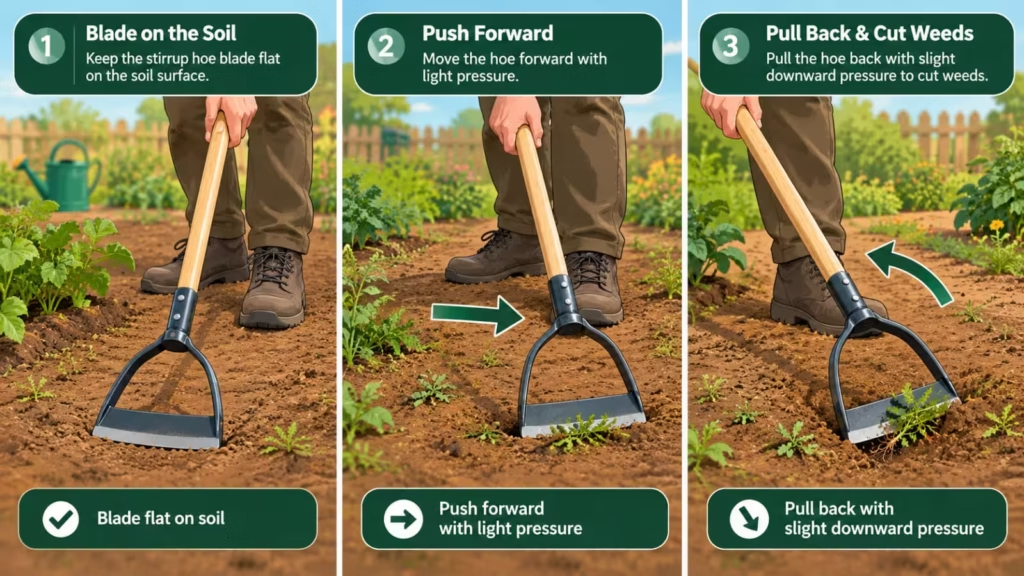
Step 4: Start With the Blade Flat
Rest the blade flat on the soil surface at the start of a row. Don’t dig in and don’t chop downward.
Step 5: Push Forward Gently
Slide the hoe forward a few inches, letting the blade skim just under the surface. On the forward stroke, keep pressure light.
Step 6: Pull Back With a Little Pressure
Pull the hoe back the same distance, adding slight downward pressure. This backward stroke is where most of the weed-cutting and root-churning happens.
Step 7: Step and Repeat
Move forward with your body as you repeat the push-pull motion down the row, letting your rear hand drive the sliding motion while your front hand steers and controls pressure.
Step 8: Clear Debris From the Blade
If cut weeds start to clog the loop, pull the handle back slightly to let debris fall away, then continue.
Step 9: Rake Up or Leave Cuttings
In dry weather, small cuttings can be left to wilt on the surface as light mulch. In damp conditions, rake them away so they don’t re-root.
Push-and-Pull Technique for Using a Stirrup Hoe
Pro Tips for Better Results
- Let the blade do the work. Fighting the tool or forcing it downward wastes energy and can bend the blade.
- Match blade width to the job. Switch to a narrower blade near crowded seedlings, and a wider one on open ground.
- Weed before weeds get too tall. The stirrup hoe handles medium growth well, but very large or deep-rooted weeds may need hand-pulling or a fork afterward.
- Keep a steady walking rhythm. A consistent push-pull-step cadence covers rows faster than stopping and starting.
- Watch for hard patches. If the blade starts skipping over dry, compacted soil, water lightly first or switch to a narrower blade.
Stirrup Hoe Maintenance and Care
Clean after each session. Knock off caked soil and rinse the blade, then dry it before storing.
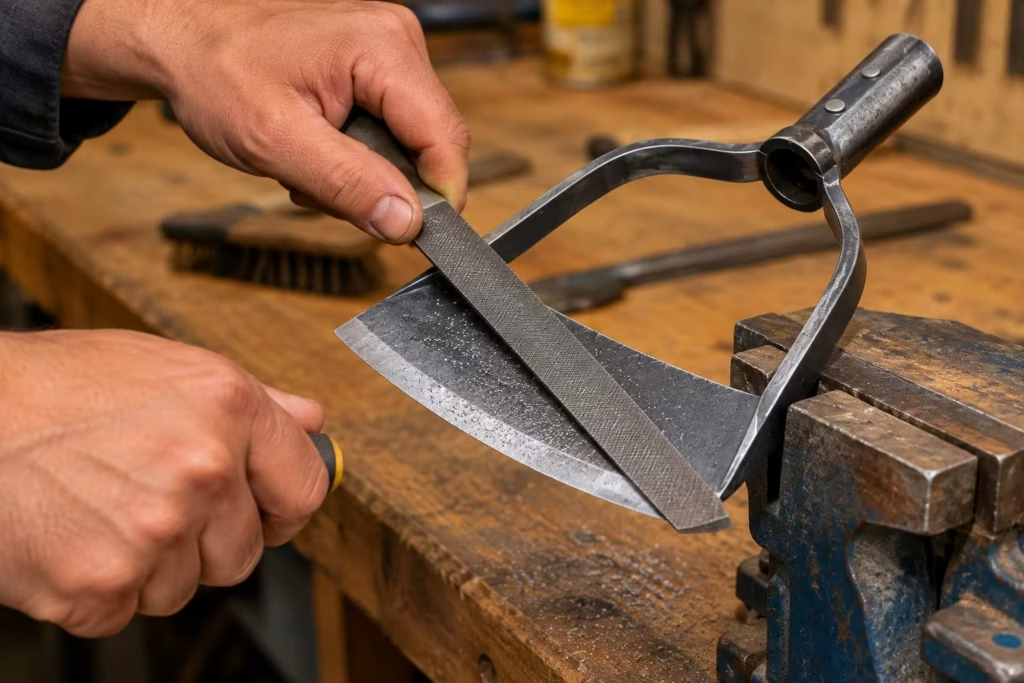
Sharpen the blade periodically. A fine file or sharpening stone along the existing edge keeps the blade slicing cleanly instead of tearing weeds. Some manufacturers note that the blade partially sharpens itself as it moves through soil, but a manual touch-up still helps.
Replace worn blades. Because many stirrup hoes use a removable spring-steel blade, swap it out once it’s bent, dull beyond resharpening, or cracked, rather than replacing the whole tool.
Check the hinge. Make sure the pivot still oscillates freely; a stiff or rusted hinge reduces the tool’s cutting efficiency.
Oil wooden handles. A yearly wipe of linseed oil on an ash or wood handle prevents splitting and keeps it comfortable to grip.
Store it dry. Hang it on a wall hook or lean it in a dry shed rather than leaving it outdoors in the rain, which speeds up rust on the frame and blade.
Heading: Sharpening the Blade of a Stirrup Hoe
Common Mistakes to Avoid
- Chopping instead of oscillating. Hacking downward defeats the point of the hinge and can bend or snap the blade.
- Using too wide a blade in hard soil. A 12-inch blade in compacted clay will skip and frustrate you; go narrower.
- Expecting perennial weeds to disappear for good. Cutting the root doesn’t remove it; tough perennials often regrow and may need digging out.
- Weeding wet, sticky soil. Mud clogs the blade and weeds can re-root; wait until conditions dry out a little.
- Ignoring a dull blade. A blade that tears rather than slices makes every stroke harder than it needs to be.
- Forcing it through sod. Stirrup hoes aren’t built for removing turf; use a sod cutter or spade instead.
- Buying the wrong handle length. Too short, and you’re back to stooping, which defeats the ergonomic benefit.
- Storing it wet. Rust sets in quickly on an unmaintained frame and blade.
Frequently Asked Questions
What is a stirrup hoe used for?
It’s used to cut weeds just below the soil surface, especially established or medium-sized weeds and grass clumps, while letting you weed standing upright.
How do you use a stirrup hoe correctly?
Keep the blade nearly flat, push forward gently, then pull back with slight downward pressure, letting the oscillating blade cut on both strokes as you walk forward down the row.
Is a stirrup hoe the same as an oscillating hoe?
Yes, “stirrup hoe” and “oscillating hoe” describe the same tool. It’s also called a hula hoe, action hoe, loop hoe or scuffle hoe depending on the seller.
Does a stirrup hoe cut on both push and pull?
Yes. The hinged blade tilts a few degrees in each direction, so both the forward and backward strokes cut weeds.
Where can I buy a stirrup hoe?
Hardware and garden retailers such as Lowe’s and Home Depot commonly stock brands like Craftsman, while specialist sellers like Hoss offer premium or wheel-hoe-compatible versions online.
Is the Hoss stirrup hoe worth the price?
Reviewers generally praise its sharp blade, ash handle and durability, though some note the mechanism is similar to cheaper hardware-store models, so it comes down to how much you value the build quality and brand.
Can a stirrup hoe remove grass or sod?
It can cut back grass clumps and runners at the edge of a bed, but it isn’t designed to remove established turf or sod.
What size stirrup hoe should I buy?
A 6-inch blade is the most popular general-purpose size. Choose narrower (3 to 5 inches) for tight spaces between plants, or wider (8 to 12 inches) for open ground in loose soil.
How often should I sharpen a stirrup hoe?
Check the edge every few weeks during heavy use. If it starts tearing weeds instead of slicing them cleanly, it’s time for a touch-up with a file or stone.
Can I use a stirrup hoe in raised beds?
Yes, especially narrower blades, which maneuver well within the confines of a raised bed frame.
What’s the difference between a stirrup hoe and a Dutch hoe?
A stirrup hoe has a hinged, oscillating blade suited to medium and established weeds, while a Dutch hoe has a fixed, flat blade best suited to fine seedling weeds in loose soil.
Final Thoughts
A stirrup hoe earns its popularity honestly: it’s affordable, widely available at stores like Lowe’s and Home Depot, and genuinely easier on your back than kneeling or chopping with a traditional hoe. Learn the push-pull rhythm, match the blade width to your soil and row spacing, and keep the edge sharp, and you’ll turn what used to be a dreaded chore into a quick pass through the garden.
Whether you go with a budget Craftsman model or invest in a heavier-duty option like the Hoss, the core mechanism is the same simple, clever idea: let the blade oscillate so every stroke counts.
Got a favorite stirrup hoe brand or a weeding trick that works for you? Share it in the comments below.
A Clean, Weed-Free Garden Row After Using a Stirrup Hoe