🌿 Your trusted guide to choosing the best garden tools.

Pruning Shears: Types, How to Choose the Right Pair, and How to Use Them

Every gardener remembers the moment a cheap, blunt pair of clippers let them down. You squeeze, the stem twists instead of snapping, and the cut ends up chewed and ragged. Two weeks later the branch above it has turned brown. The plant did not die because of the pruning. It suffered because the tool was wrong, dull or dirty.
Choosing well takes about five minutes of knowledge, and it pays you back every season. A good pair slices through stems with a light squeeze, leaves clean wounds that heal fast, and lasts for decades. A poor one fights you the whole way.
This guide answers the questions people actually type into search boxes. What are pruning shears used for? Bypass or anvil, which wins? Are battery-powered models worth the money? How do you sharpen them, and how big a branch can they really handle? Read on and you will leave knowing exactly what to buy, how to cut, and how to keep the blades in shape.
Quick question before we begin: what will you be cutting most? Roses, fruit trees, herbs on a windowsill, or overgrown shrubs? Keep your answer in mind, because the best choice changes with the job.
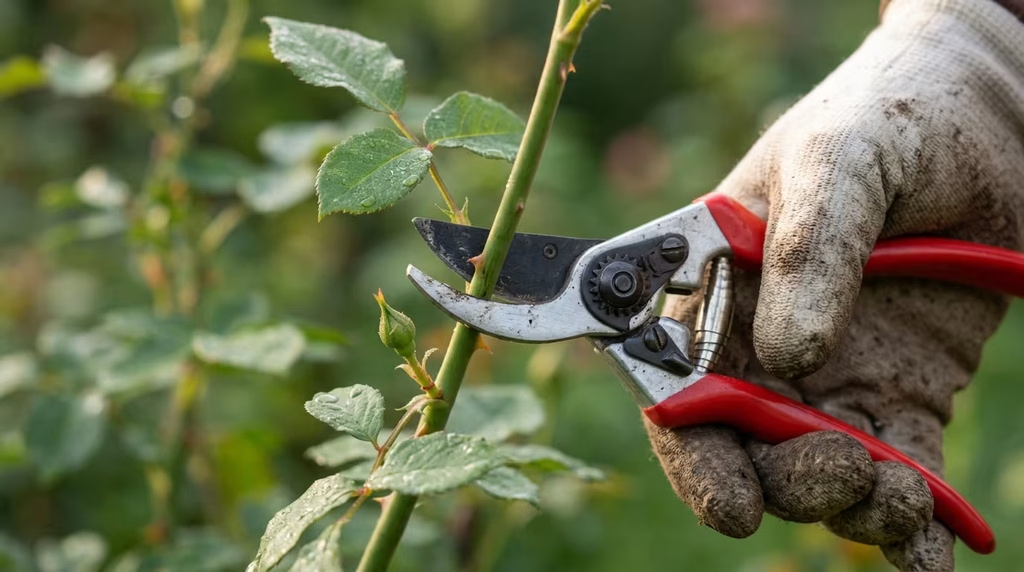
Making a Clean Cut on a Rose Stem with Bypass Pruners
What Are Pruning Shears?
Pruning shears are hand-held cutting tools designed to trim living stems, shoots and small branches. You operate them with one hand, closing two handles so a sharpened blade cuts through plant material. People also call them hand pruners, secateurs, garden clippers or simply pruners. Dictionaries define the word in the same way: a pair of shears for pruning plants.
They sit between scissors and loppers. Scissors suit soft, thin growth such as herbs and flower stems. Loppers, with their long handles, tackle thicker wood. Hand pruners cover the wide middle ground: the stems, canes and twigs that make up most of a gardener’s cutting.
A typical pair handles stems up to about three-quarters of an inch thick. Beyond that, the right tool changes. Extension guidance puts loppers at roughly three-quarters to one and a half inches, pole pruners at about two inches, and saws for anything beyond. Forcing a small pair through wood that is too thick tears the cut and can damage the tool.
Names You Will Meet
- Hand pruners or hand shears
- Secateurs (the common British term)
- Garden clippers
- Floral shears or snips (a smaller, lighter version)
- Hedge shears (a different tool, with long blades for formal hedges)
- Loppers (long-handled, for thicker branches)
Pruning Shears Compared With Similar Tools
It is easy to buy the wrong cutter. This table shows where each one belongs.
| Tool | Handle | Typical capacity | Best for | Not ideal for |
|---|---|---|---|---|
| Hand pruners | Short, one hand | Up to about ¾ inch | Stems, canes, roses, shrubs | Thick branches |
| Floral snips | Very short | Soft stems | Flowers, herbs, houseplants | Anything woody |
| Loppers | Long, two hands | About ¾ to 1½ inches | Thick shrub branches, reach | Fine, delicate cuts |
| Pole pruners | Very long or telescoping | Up to about 2 inches | High branches from the ground | Precision close to the ground |
| Hedge shears | Two long blades | Thin, soft growth | Shaping formal hedges | Pruning trees or shrubs |
| Pruning saw | Short or long | Over about 1¾ inches | Large limbs | Quick small snips |
Which row describes your garden? Most people need hand pruners first. Add a lopper or saw only when a real thickness problem shows up.
Anatomy of Pruning Shears
Knowing the parts helps you judge quality in a shop or an online listing.
- Blades. The business end. Good blades are hardened steel, often with a non-stick or Teflon-style coating. Testing at a university extension found that coated blades generally needed less cutting force and resisted corrosion.
- Pivot bolt. The joint that holds the blades together. It should move smoothly with no wobble, and ideally be adjustable and replaceable.
- Handles. Metal, rubber-coated or plastic. Cheap plastic handles are the most likely part to break.
- Spring. Opens the blades after every squeeze. A weak spring tires the hand quickly.
- Safety catch. Locks the blades closed when stored.
- Replaceable parts. The best makers sell spare blades, springs and bolts, so one worn part does not mean a new tool.
want to know about hand pruners
Parts of Bypass Pruning Shears at a Glance

Types of Pruning Shears
Not all pruners cut the same way. The design decides what they are good at.
Bypass Pruning Shears
Two curved blades slide past each other like scissors. One blade is sharpened and cuts, while the other, a thicker hooked blade, supports the stem. Most professional gardeners prefer this style for living growth because it can cut close to a stem or bud. It is the usual choice for roses, flowering shrubs, fruit trees and herbs.
The limitation: bypass pruners are not the best option for dead, dry or very woody stems. They can twist or jam in hard material.
Anvil Pruning Shears
A single sharpened blade closes down onto a flat surface, the anvil, like a knife on a chopping board. Many gardeners find they handle dead and woody stems with less effort. The drawback is the crushing action, which can bruise living stems, and sap tends to gather on the flat surface so they need cleaning more often.
Bypass or Anvil: What the Testing Says
Here is something most buying guides skip. The common belief says bypass cuts cleanly and anvil crushes. Yet laboratory testing by a university extension service found that bypass pruners can crush a branch more than a sharp anvil pruner, despite their reputation. The same testing found that neither type has a clear advantage in cutting force, and that blade condition and design matter more than the category.
What does that mean for you?
- Choose bypass if you mostly cut green, living growth and want a tidy wound.
- Choose anvil, ideally with a sliding blade linkage, if you cut a lot of dead wood or want the least effort.
- Whichever you pick, keep it sharp. A sharp anvil beats a dull bypass every time.
Ratchet Pruning Shears
A ratcheting mechanism lets you cut a thick branch in several short squeezes instead of one big one. Each stroke needs less force, which helps people with weaker hands or who prune for long periods. Extension testing recommends ratchet-type anvil pruners for branches over half an inch thick. The trade-off is time: you need multiple strokes for a large branch.
Battery and Electric Pruning Shears
Cordless pruners use a motor to close the blade, so your hand only guides the tool. DeWalt’s 20V MAX model, for example, is rated by the maker for branches up to 1.5 inches thick, weighs about 3 pounds, has an LED light and uses non-stick coated blades. A review of the model notes its “tool only” version needs a separate battery, and that customer reports of thicker cuts exceed the manufacturer’s rating, so it is wise to stay within the stated limit.
They shine when you have a lot of cutting, such as an orchard, a large rose collection or a hedge. For occasional jobs, a good manual pair is cheaper, lighter and never runs flat.
Long-Handled, Telescoping and Pole Pruners
When branches sit out of reach, long-reach tools save you from climbing a ladder. Telescoping and extendable designs adjust to different lengths. Iowa State University guidance recommends doing pole pruning from the ground whenever possible, and calling a trained arborist for high or power-line work.
Small, Floral and Heavy-Duty Models
Compact floral snips suit herbs, flowers and houseplants but cannot handle woody stems. At the other end, large heavy-duty pairs with robust handles are made for thick canes and woody shrubs. They are heavier, so check that your hand can control them comfortably.
What Pruning Shears Are Used For
Their reach is bigger than most people expect.
- Shaping shrubs and bushes. Remove crossing, damaged or overgrown stems to keep a plant open and healthy.
- Roses. Cutting back canes, removing spent blooms and clearing dead wood.
- Fruit trees. Thinning small branches to improve light and airflow.
- Harvesting. Cutting herbs, flowers, grapes and tomatoes cleanly without tearing the plant.
- Deadheading. Snipping faded flowers to encourage more blooms.
- Houseplant care. Trimming leggy growth, dead leaves and overgrown stems indoors.
A reality check: these are for plant stems, not wire, fencing or thick lumber. As one extension specialist put it, a pruning shear is not a wire cutter.
Who Should Use Pruning Shears?
You will probably want a pair if you:
- Grow roses, shrubs or fruit trees
- Keep a vegetable garden or herb bed
- Look after houseplants
- Tend a flower border or cutting garden
- Maintain a hedge or orchard
- Need to reduce hand strain with ratchet, ergonomic or battery-powered tools
You can skip a manual pair for very large jobs and choose a lopper, saw or power tool instead.
How to Choose the Right Pruning Shears
Work through these steps and you will avoid the usual mistakes.
- List your jobs. Roses and herbs point toward bypass or small floral shears. Dead wood points toward anvil. Thick canes point toward ratchet or loppers.
- Check cutting capacity. Match the stated capacity to your thickest stem, and then go slightly bigger for comfort. Never force a pair through wood it was not built for.
- Test the grip. Hands vary. Look for handles that fit your palm without stretching. A tool that is too large is tiring, and one that is too small cramps.
- Consider ergonomic and ratchet designs. Cushioned handles, rotating grips, ratchet action and battery power all reduce strain. They are worth looking at if you have arthritic or weak hands.
- Inspect the steel. Hardened or stainless steel resists rust and keeps its edge. Coated blades slide through stems more easily.
- Look for replaceable parts. Choose a model with spare blades, springs and bolts available.
- Think about weight. Light tools suit long sessions. Heavy-duty models give more strength but need more control.
- Decide your budget. Prices run from about ten dollars to well above fifty. Higher prices often buy better steel and stronger handles, but extension testing found that price alone did not predict cutting effort, so read specs rather than assume.
- Check where it is made. Some buyers look for American-made or Made in USA tools. Read the label carefully, since “assembled in” and “made in” can mean different things, and confirm with the manufacturer if it matters to you.
- Buy from a source you trust. Hardware stores such as Home Depot, Lowe’s, Ace, Menards, Harbor Freight and Walmart, as well as Amazon and specialist garden retailers, all stock options. Compare current listings and return policies before you decide.
Popular Brands and Models to Know
Treat this as a starting point. Specifications and prices change, so verify before buying.
Felco
The Swiss brand Felco is a frequent professional benchmark. The F-2 is often recommended as a top bypass pair, and the Felco 32 is an anvil model described as capable of cutting sticks about an inch thick. Both are repairable, which is part of their reputation.
Fiskars
A widely available family of bypass, anvil and ratcheting pruners, from budget to professional grades. It is a safe starting point if you want something easy to find in a hardware store.
DeWalt 20V MAX Cordless Pruner
A popular battery-powered option for people with a lot of cutting. It is rated for branches up to 1.5 inches, so it fits tasks between hand pruners and loppers.
Craftsman, Cutco and Store Brands
These also offer ratcheting versions at lower prices. Check handle build and blade steel, since quality varies by line.
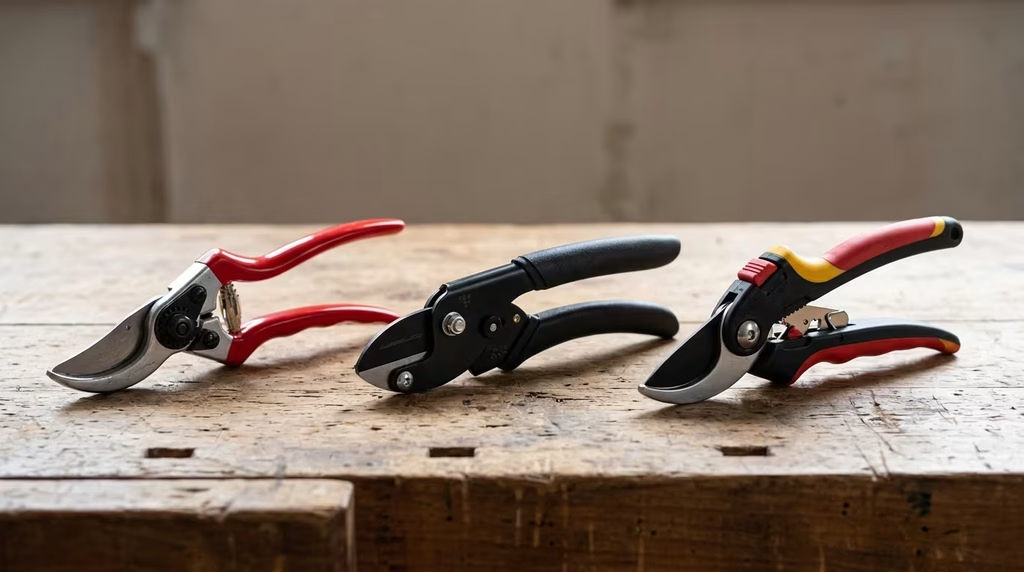
Bypass, Anvil and Ratchet Pruners Side by Side
How to Use Pruning Shears (Step by Step)
Good technique beats strong hands. Follow these steps for cuts that heal fast.
- Pick the right moment. Prune according to the plant. Many shrubs and fruit trees are pruned in dormancy, while some flowering shrubs are pruned right after they bloom. Check the plant’s needs first.
- Start with a sharp, clean tool. Wipe the blades with rubbing alcohol or a diluted bleach solution, especially when moving from a diseased plant to a healthy one.
- Find the target. Look for dead, diseased, damaged, crossing or crowded stems first. Remove those before shaping.
- Hold the tool properly. Grip the handles firmly with your thumb on the safety catch side so you can release it, and keep your other hand clear of the blades.
- Position the bypass blade. On a bypass pair, place the thin cutting blade on the side closest to the plant you are keeping and the hook on the waste side. That leaves a cleaner wound on the part that stays.
- Cut just above a bud. Aim for about a quarter inch above a healthy bud or side shoot, at a gentle slope that angles away from the bud so water runs off.
- Keep branches within capacity. If you must twist, wrestle or use both hands, switch to loppers or a saw.
- Use ratchet power wisely. Squeeze, release and squeeze again. Do not force the final stroke.
- Work steadily. Step back every few cuts to check the shape.
- Clean as you go. Wipe sap from the blades, especially on anvil models, which collect it faster.
- Lock and store. Engage the safety catch and put the tool away dry.
Special Cases
Roses: Cut at about 45 degrees, just above an outward-facing bud, so growth heads away from the center of the plant.
Fruit trees: Open the center to let light and air in, and remove crossing branches while keeping cuts small.
The Correct Angle and Position for a Healing Cut

How to Sharpen Pruning Shears
Dull blades are the number one reason cuts turn ragged. Sharpening takes about fifteen minutes and is easier than most people think. Sharpen roughly once a year, or more often if you prune heavily.
You will need: a sharpening stone, diamond tool or metal file, a small brush, safety gloves, a cloth, a screwdriver or wrench, and light oil.
- Check for dullness. If cuts need more force or leave ragged edges, it is time.
- Take them apart if possible. Photograph the parts so you can reassemble them. If the pair will not come apart, you can sharpen in place with the blade pointing away from you.
- Clean thoroughly. Remove sap with sandpaper or solvent and rust with steel wool. Wash, rinse and dry fully.
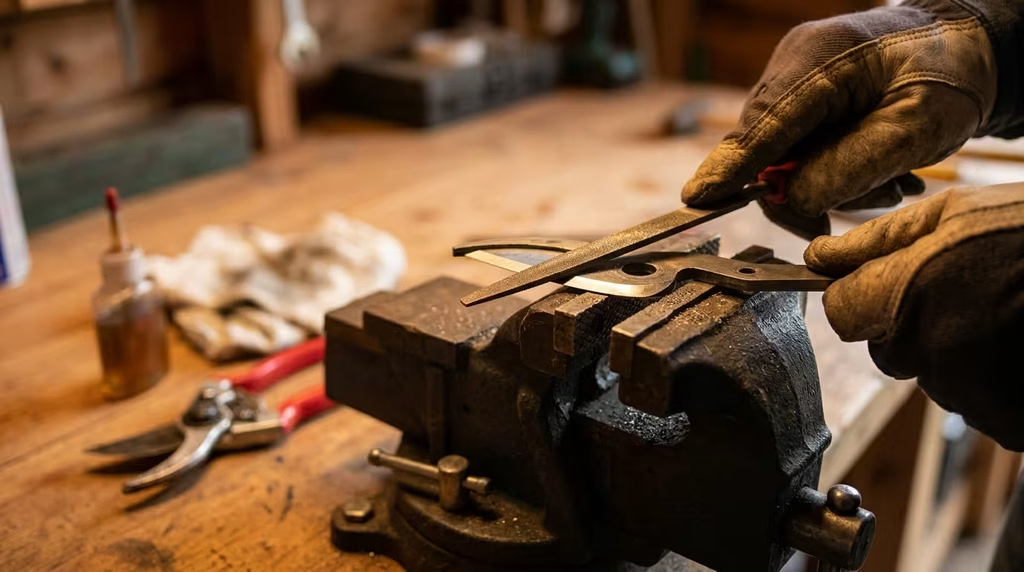
- Sharpen the right edge. On bypass pruners, sharpen only the single beveled edge of the cutting blade. On anvil pruners, sharpen both angled edges.
- Match the existing angle. Stroke away from you in one direction, following the curve of the blade from the thick part toward the tip. Start with a coarse surface and finish on a fine one.
- Remove the burr. Run the flat side of a bypass blade against the stone to remove the tiny burr, without sharpening it.
- Test. A properly sharp bypass pair will slice a sheet of paper cleanly.
- Reassemble and adjust. Bypass blades should pass closely with no gap, and anvil blades should meet the anvil squarely.
- Oil and store. Wipe with light oil, engage the safety catch and store in a dry place.
A dedicated sharpener with a built-in guide holds the angle for you.
Sharpening the Beveled Edge with a Diamond File
Pruning Shears Maintenance and Care
A few habits double the life of your tools.
- Clean after each use. Wipe off sap and soil. A solvent helps with sticky residue.
- Dry thoroughly. Moisture is the main cause of rust.
- Oil the blades and pivot. A drop of light oil keeps the action smooth and prevents corrosion.
- Disinfect between plants. Use rubbing alcohol or a diluted bleach solution when working near diseased growth, then rinse and dry bleach off steel.
- Tighten the pivot bolt. A loose joint chews stems instead of cutting them.
- Store them closed and dry. Use the safety catch and keep them off damp concrete.
Common Mistakes to Avoid
Be honest, do you recognise any of these?
- Cutting too thick. Forcing a small pair through a big branch ruins the cut and the tool.
- Using dull blades. They crush, tear and invite disease.
- Skipping the cleaning. Dirty blades can carry disease from one plant to another.
- Cutting at the wrong angle. A flat cut or one too close to a bud can lead to dieback.
- Using anvil pruners on tender living stems. They may bruise the tissue.
- Buying by price alone. A cheap pair with plastic handles may break within a season, but a high price does not guarantee low effort either.
Extra Tips From the Gaps in Other Guides
Match the tool to the person. Many guides compare tools but forget the user. If your hands tire or ache, ratchet pruners, ergonomic grips or a battery model can make the difference between enjoying the garden and dreading it.
Learn your limits. If the branch is thicker than about three-quarters of an inch, reach for loppers. Above about one and three-quarter inches, use a pruning saw.
Stay safe. Wear gloves and eye protection when pruning, especially above head height. For tall trees or anything near power lines, hire a qualified arborist.
Table of Contents
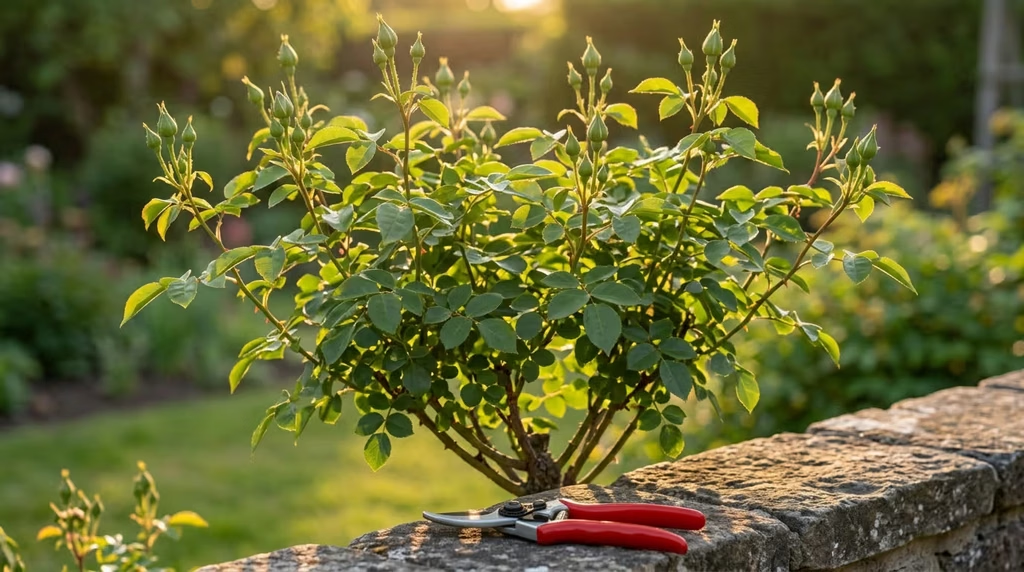
A Healthy, Freshly Pruned Rose Bush
Frequently Asked Questions
What are pruning shears used for?
They trim, shape and harvest from plants. Typical jobs include cutting roses, shaping shrubs, thinning fruit trees, deadheading flowers, harvesting herbs and tidying houseplants.
What is the difference between bypass and anvil pruners?
Bypass blades slide past each other like scissors, which suits living stems. Anvil blades close onto a flat surface, which suits dead or hard wood. Testing suggests blade sharpness matters as much as the type.
What is the best pruning shear for roses?
A sharp bypass pair that fits your hand is the usual pick. Choose a size that handles your thickest canes, and keep the blades clean to avoid spreading disease.
What size branch can pruning shears cut?
Most hand pruners handle up to about three-quarters of an inch. Loppers tackle roughly three-quarters to one and a half inches, and a pruning saw is better beyond that.
Are ratchet pruners worth it?
Yes, if you cut thick branches or have weak or sore hands. Each stroke needs less force, though you will need several strokes for large cuts.
Are battery-powered pruners any good?
They are excellent for high-volume work. One popular 20V model is rated for branches up to 1.5 inches. For occasional pruning, a manual pair costs less and weighs less.
How often should I sharpen them?
About once a year, or more often with heavy use. If cuts look ragged or need extra force, sharpen sooner.
How do I clean pruning shears?
Remove sap with solvent or fine sandpaper, rinse, dry fully and wipe with light oil. Disinfect with alcohol or diluted bleach between plants if disease is a concern.
What are the best pruners for arthritic hands?
Look for ratchet action, ergonomic or rotating handles, and lighter designs. Battery-powered models reduce hand strain the most. If pain is a concern, talk to a health professional.
What is the difference between pruning shears and loppers?
Loppers have long handles for leverage and handle thicker branches. Pruning shears are short, one-handed and better for precise work.
Where can I buy a pair near me?
Garden centers and hardware stores such as Home Depot, Lowe’s, Ace and Menards usually stock them, as do Walmart and online retailers.
Final Thoughts
The right pruning shears feel like an extension of your hand. They cut cleanly, they never fight you, and they keep your plants healthy because every wound is neat and quick to heal. The wrong ones turn a pleasant job into a chore and can harm what you are trying to help.
To recap: match the type to the job, check the cutting capacity, pick a handle that fits, keep the blades sharp and clean, and use loppers or a saw when the branch demands it. Do that, and one good pair can last for decades.
Your turn: what do you prune most, and which type are you leaning toward? Tell us about your garden in the comments, and let other readers help you decide.