🌿 Your trusted guide to choosing the best garden tools.

Scuffle Hoe: What It Is, How to Use It, and Which One to Buy

Picture this: it is a warm Saturday morning, the coffee is still hot, and your vegetable bed is wearing a fuzzy green carpet of baby weeds. You could kneel down and pinch them out one by one for an hour. Or you could walk the row with a long handle, slide a blade just under the surface, and clear the whole bed before your coffee gets cold.
That second option is the scuffle hoe, and once you have tried it, hand weeding feels like a very slow way to spend a weekend.
This guide is built to answer every question you are likely to have. What exactly is the tool? How does it differ from a stirrup hoe or a Dutch hoe? Which brand is worth your money? How do you stop it from skipping over soil or chopping your seedlings? Read on, and by the end you will know how to choose, use and look after one like a seasoned grower.
Quick question before we start: what are you weeding? A tidy vegetable patch, a mulched flower bed, or a gravel driveway that keeps sprouting grass? Keep that in mind, because the best choice changes with the job, and we will cover all three.
want to know about vegetable
A Scuffle Hoe Slicing Young Weeds in a Vegetable Row

What Is a Scuffle Hoe?
A scuffle hoe is a long-handled weeding tool with a thin, sharp blade that you push and pull across the top of the soil. The blade slices weeds at or just below the surface, severing the stem from the root. The name comes from the “scuffling” motion: a shallow, scraping back-and-forth stroke rather than the heavy chopping swing you use with a classic garden hoe.
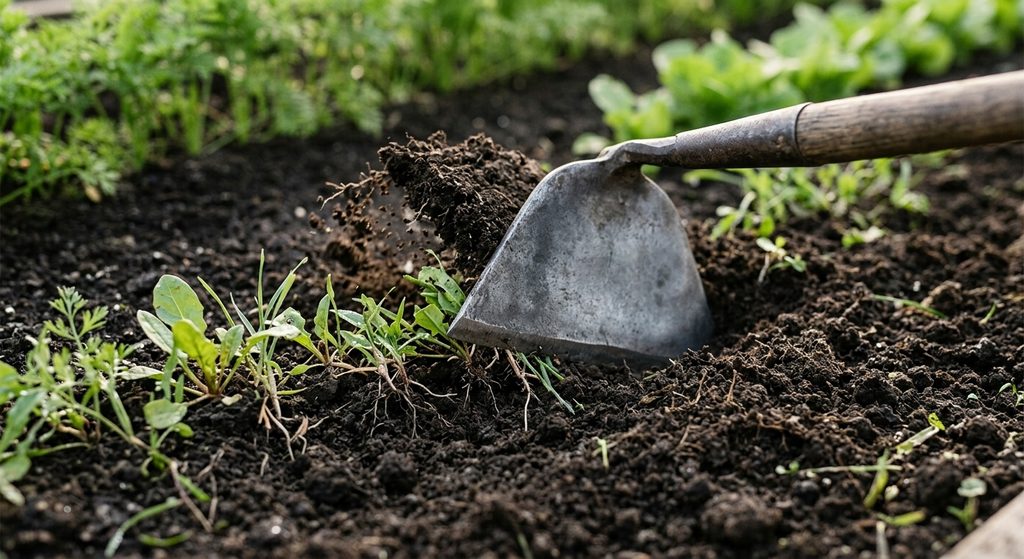
Gardeners and land managers have used the tool for generations because it solves a basic problem. Weeds are easiest to kill when they are tiny, and most of them germinate in the top inch of soil. It works exactly in that zone. University weed-management guidance describes the stroke as moving the blade on or just under the surface, often only a quarter to half an inch deep.
Here is where people get confused: the phrase is used in two ways.
- As a family name, it covers every hoe that works with a shallow push-pull or push-only action. That includes the stirrup (oscillating) hoe, the Dutch hoe, the triangle or diamond hoe, and the collinear hoe.
- As a specific tool, most shoppers use it for the fixed-blade versions, usually the triangular, three-sided head sold by Rogue Hoe, Ace and others.
Both meanings are correct, so do not worry if a product page and a gardening forum seem to disagree. We will sort out each type in the next section.
Names You Will See for the Same Tool
Depending on the country, brand and catalog, you will run into these labels:
- Push-pull hoe
- Scuffle hand hoe (the short-handled version for close work)
- Stirrup hoe, hoop hoe or loop hoe
- Oscillating hoe, action hoe, hula hoe or swivel hoe
- Triangle hoe or three-sided hoe
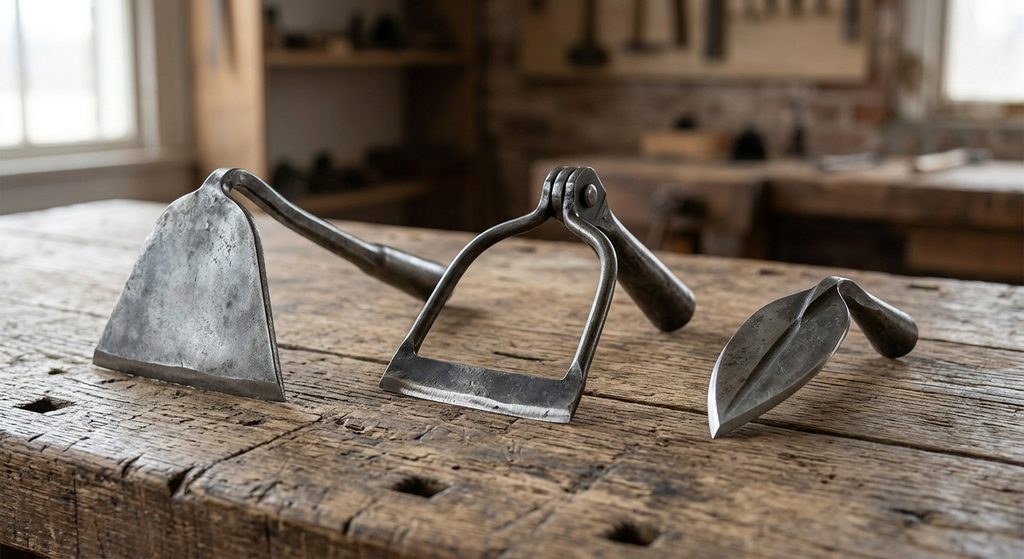
- Floral hoe (a smaller head for flower beds)
Types of Scuffle Hoes Compared
Not every head is shaped the same, and the shape decides where the tool shines. This table gives you the fast version.
| Type | Blade design | Cuts on | Best for | Watch out for |
|---|---|---|---|---|
| Triangle / three-sided | Fixed, sharpened on all three edges | Push and pull | Rows, mulch beds, tight spaces | Sharp corners can nick stems |
| Stirrup (oscillating) | Hinged loop with two cutting edges | Push and pull | Open beds, paths, driveways | Can clog in heavy or rocky soil |
| Dutch hoe | Flat blade, forward-facing edge | Mostly push | Loose soil, light weeding | Less effective in compacted ground |
| Collinear hoe | Narrow, flat blade | Pull, held flat | Precision work beside seedlings | Needs practice and a gentle touch |
| Hand-held model | Short handle, small head | Push and pull | Raised beds, containers | More bending required |
Which one sounds like you? If you garden in rows or tight beds, start with a triangle head. If you have a large open space or paths to clear, a stirrup head covers ground faster.
Scuffle Hoe vs Stirrup Hoe: What Is the Real Difference?
This is the question search results rarely answer clearly, so here it is in plain language.
A fixed-blade scuffle hoe has a head that does not move. You control the angle with your wrists and posture. Hold it too steeply and it digs in; too flat and it skims over the top. Because the blade is rigid and sharp on all edges, it handles firmer ground better and gets under mulch without dragging much of it around.
A stirrup hoe has a loop-shaped head that pivots on the handle. That pivot adjusts the cutting angle on its own, so you get a consistent shallow depth with less effort. Both edges are sharp, so it cuts in both directions. The trade-off is that the open loop can clog and the pivot can struggle in heavy, compacted or stony soil.
The practical rule: beginners often prefer the stirrup because it is forgiving. Experienced growers often reach for a fixed triangle head because it is precise and tough. Many serious gardeners own both and pick whichever matches the day’s job.
Anatomy of a Scuffle Hoe
Understanding the parts helps you judge quality before you buy.
- Head (blade): The cutting part. Look for tempered or heat-treated steel. Rogue Hoe, for example, makes its blades from recycled agricultural disc blades, which are chosen because they hold an edge well.
- Ferrule or socket: The metal collar that joins the head to the handle. A long steel ferrule is stronger than a short or pinched one.
- Handle: Wood (ash or hickory), fiberglass, or occasionally metal. Wood feels warm and absorbs vibration; fiberglass is light and weather-resistant.
- Grip: Some models add a cushioned end grip or a second pistol-style grip for better control during long sessions.
- Head width: Typically 4 to 8 inches. Narrow heads fit between plants. Wide heads cover more ground per stroke.
Anatomy of a Weeding Hoe at a Glance

What This Weeding Hoe Is Used For
The tool is more versatile than most people expect.
- Weeding young beds. This is the main job. It clears seedlings and small weeds, and it even removes tiny weeds that have not yet broken the surface.
- Cultivating between rows. A light pass loosens the crust that forms after rain, letting air and water reach roots.
- Weeding under and through mulch. Gardeners often say a triangle head slides beneath the mulch layer without scattering it.
- Clearing gravel driveways and paths. Cut-and-collect works well here: slide the blade just below the surface, then rake the debris away.
- Clearing spent crops. Some growers use it to knock out old lettuce or spinach rows before replanting.
- Hilling and tidying edges. Stirrup heads are sometimes used to draw loose soil toward plant bases.
A quick reality check: it is a surface tool. It is not designed for digging, and it will not remove deep-rooted perennials like established dock or bindweed. For those, you need a digging fork, a weeder or a grub hoe.
Who Should Use This Tool?
You will probably love this tool if you:
- Grow vegetables or flowers in rows or raised beds
- Have back or knee trouble and want to weed standing up
- Manage a large garden where hand weeding takes forever
- Keep a mulched landscape and need quick maintenance
- Maintain a gravel driveway, patio gaps or walking paths
- Run a small market garden or farm and need fast, repeatable weeding
You may want a different tool if your ground is rock-hard clay full of stones, or if your main enemy is thick perennial weeds with deep roots.
How to Choose the Right Scuffle Hoe
Follow these steps and you will avoid the most common buying mistakes.
- Start with your space. Tight rows and flower beds suit a head of 4 to 6 inches. Open beds and paths suit 6 to 8 inches or a stirrup design.
- Match the head to your soil. Loose loam and sand are friendly to almost any design. Heavier or stony soil favors a fixed, rigid triangle head.
- Check the steel. Heat-treated or tempered steel keeps its edge longer. Cheap, soft steel dulls quickly and bends.
- Pick a handle you can live with. Stand next to it if you can. A good length lets you keep an upright posture with the head flat on the ground. Roughly 54 to 60 inches suits most adults, and taller people may want longer.
- Think about weight. A lightweight tool is easier to use for an hour. A heavier one gives more authority in tough ground.
- Look for replaceable parts. A well-built tool can last decades, and you can always swap a handle.
- Set a realistic budget. Prices vary widely. Big-box store models, such as the Ace and Home Depot offerings, sit at the budget-friendly end. Hand-forged American models from specialty makers like Rogue Hoe cost noticeably more but are built for professional abuse.
Popular Scuffle Hoe Options and Brands
Here are the names that keep appearing in search results, with honest notes on each.
Rogue Hoe
Rogue Hoe is a popular name for fixed-blade, three-sided hoes. The Rogue scuffle hoe is sharpened on three sides, so it cuts when you push and when you pull. The blades are made from tempered steel, and a curved hickory handle is common. It is a favorite among serious growers, landscapers and trail workers. The price reflects the build quality, so it is a “buy once” tool rather than a bargain.
Ace Hardware Options
If you want something easy to find, Ace carries scuffle hoes with a triangular steel head. One popular listing is a 54-inch model with a fiberglass handle and a cushioned end grip, designed for weeding standing up. Ace also sells a smaller floral hoe for flower beds. Prices have generally been affordable, but always check the current listing before you buy.
Home Depot Action Hoes
Home Depot stocks several long-handled models, including wood-handled action hoes. A reviewer-friendly option is the 54-inch wood-handled version. It is a practical choice for driveway and general garden weeding if you want convenience over hand-forged craftsmanship.
Stirrup-Style Options
Several brands make oscillating stirrup heads, including Hula Ho, Hoss Tools and DonSail. These are usually sold as “stirrup hoes” or “action hoes” interchangeably. Shop for a stirrup model and these are the names you will see.
Triangle, Stirrup and Floral Hoe Heads Side by Side
How to Use a Scuffle Hoe (Step by Step)
Technique matters more than muscle. Follow these steps and you will get clean cuts with almost no effort.
- Pick the right time. Weeds should be hoed while they are small, ideally before they pass a few inches in height. Dry, sunny weather is best, because cut weeds then wither on the surface instead of re-rooting.
- Check the soil. It should be moist enough to work but not soggy. Soil that is rock-dry can make the blade skip. Wet soil sticks and clumps.
- Stand upright. Hold the handle in both hands with a relaxed grip and keep your back straight. Let your legs and body weight do the work, not your arms.
- Set the angle. Tilt the head so the blade sits nearly flat, just under the surface. Too steep and it digs in. Too flat and it slides over weeds without cutting.
- Push forward. Glide the blade ahead in a smooth, shallow stroke. The goal is to slice weeds at the base, not move large amounts of soil.
- Pull back. Draw the blade toward you in the same plane. A good push-pull scuffle hoe cuts on both strokes, so you clear a patch twice as fast.
- Work backward. Move in a pattern that keeps you from walking over cleared ground, which would compact the soil and plant new weed seeds.
- Choke up near plants. Slide your hand down the handle and use short strokes in tight spots. This is how you get close to crops without clipping them.
- Rake and remove. In a dry spell, leave small cuttings on the surface to wither. In damp weather, rake them up so they do not root again.
- Repeat. One pass will not finish the season. Plan to hoe every week or two while weeds are still tiny. That rhythm saves you from the big, ugly weeding sessions later.
Special Cases
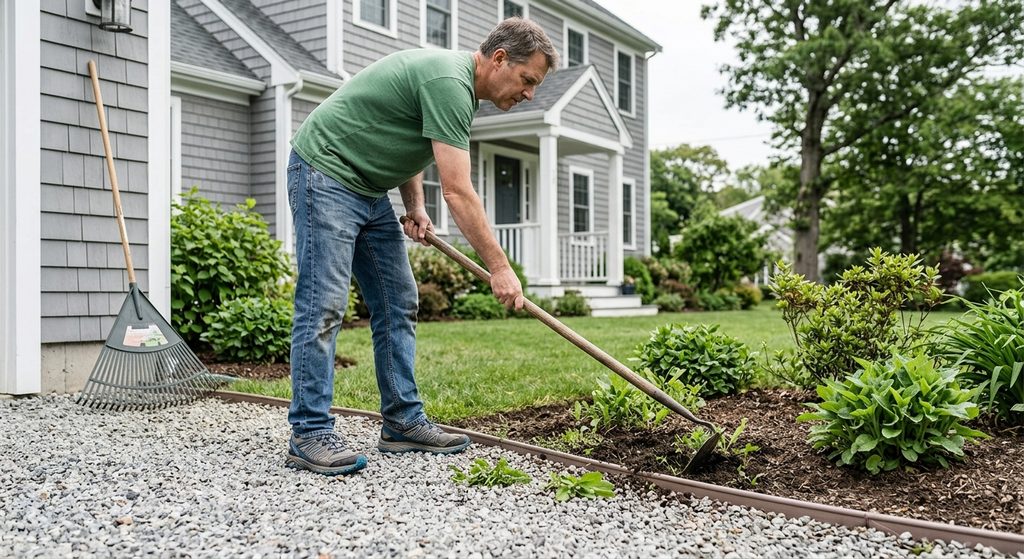
On a gravel driveway: Do not push deep. Apply light downward pressure, slide the blade just under the surface, and cut weeds near the roots. Then collect them with a leaf rake and compost or mulch them.
In mulch: Use a triangle head if possible. It tends to slip beneath the mulch with less disturbance than a wider stirrup frame.
Near seedlings: Many experienced growers switch to a narrow collinear hoe or a small hand hoe when weeds are within a couple of inches of delicate plants.
Correct Blade Angle and Depth for Shallow Hoeing
Scuffle Hoe Maintenance and Care
A dull blade turns a joy into a chore. Fortunately, care is quick.
- Sharpen regularly. A flat file works well. An angle grinder or a drill-mounted grinding attachment works too. Do not over-sharpen, because an extremely thin edge wears away faster.
- Brush off soil after each use. A stiff brush or a quick wipe against grass removes the gritty residue that dulls edges.
- Dry before storing. Moisture causes rust. Hang the tool in a dry shed or garage.
- Oil the steel. A thin wipe of oil, such as camellia or linseed oil, protects the blade over winter.
- Care for the handle. Wooden handles benefit from a light coat of boiled linseed oil each season. Sand off any splinters.
- Check the ferrule. A loose head is a safety issue. Tighten or replace it if you notice wobble.
Pro tip: sharpen at the start of the season, then touch up the edge every few outings. A little regular attention saves you from one big, tiring job.
Common Scuffle Hoe Mistakes to Avoid
Do you recognize any of these?
- Hoeing too deep. This brings dormant weed seeds up to the light and tires you out. Shallow is the goal.
- Waiting too long. The tool excels on young weeds. Mature weeds with thick stems and deep roots will laugh at it.
- Using it on soggy soil. Mud clings to the blade and creates a mess.
- Ignoring the edge. A dull blade bruises weeds rather than cutting them, so they bounce back.
- Chasing perennials. If the root system is deep and sturdy, cutting the top just invites regrowth.
- Chopping like a draw hoe. Do not lift and swing. Keep the blade low and the strokes long and smooth.
- Buying the widest head available. Bigger is not always better. A head too wide for your row spacing will shave your crops.
Gaps Other Guides Skip: A Few Extra Tips
Pair it with mulch. After hoeing, a thin layer of mulch blocks light and slows new weed germination. The combination is far more effective than either method alone.
Hoe before weeds are visible. Weeds at the “thread” stage, just germinated and barely visible, die quickly. A quick pass through a bed where nothing seems to be growing can wipe out thousands of invisible seedlings.
Use the right tool after the first pass. Once weeds are under control, a more precise tool such as a wire weeder or collinear hoe handles the delicate work.
Mind your safety. A sharp-edged triangle head can nick shins and stems. Wear closed shoes and keep a gap between the blade and your feet.
Know its limits. Heavily compacted, rocky or deeply rooted ground needs a grub hoe, a mattock or a digging fork first.
Clearing a Gravel Driveway with a Scuffle Hoe
Frequently Asked Questions
What is a scuffle hoe?
It is a long-handled weeding tool with a thin, sharp blade that you push and pull just under the soil surface to cut weeds at the roots. It is quick, gentle on your back and ideal for small weeds.
What is it used for?
Mainly for weeding vegetable beds, flower beds, mulched landscapes, gravel driveways and paths. It also lightly cultivates the topsoil.
Is a scuffle hoe the same as a stirrup hoe?
They are closely related. A stirrup hoe is one type within this family, with a hinged, loop-shaped head. A fixed triangle head is another type. Many sellers use the names interchangeably.
How deep should I hoe?
Only about a quarter to half an inch. You want to cut weeds just under the surface, not turn over the soil.
Can it kill perennial weeds?
Not reliably. It will cut the top growth, but deep roots can regrow. Use a digging tool for perennials, and use the hoe for young annual weeds.
What is the best scuffle hoe for weeding?
It depends on your soil and layout. For tough, professional use, many gardeners choose a Rogue triangle hoe. For budget-friendly convenience, Ace and Home Depot models are easy to find. For open beds and paths, a stirrup type is a popular pick.
Can I use it on a gravel driveway?
Yes. Use light downward pressure, slide the blade just under the gravel surface, and rake away the cuttings. Do it while the weeds are small.
How do I sharpen the blade?
Use a flat file or grinder along the cutting edges, following the original angle. Avoid making it razor-thin.
Where can I buy a scuffle hoe?
Hardware stores such as Ace and Home Depot stock them, and you can find specialty options through garden suppliers and online marketplaces. Many shoppers check local stock online first.
What is a scuffle hand hoe?
It is the short-handled version, intended for raised beds, containers and close work around delicate plants.
Final Thoughts
A scuffle hoe will not turn weeds into a thing of the past, but it will change your relationship with them. Instead of dreading a big weekend of back-breaking work, you will spend a few relaxed minutes every week gliding a blade through the top inch of soil. The weeds never get big enough to matter.
To recap: choose the head that fits your space, pick steel that holds an edge, keep your strokes shallow, work while weeds are tiny and sharpen often. Do those four things and a decent tool will serve you for decades.
Your turn: which type are you leaning towards, a fixed triangle head or a stirrup? Drop your garden setup in the comments and let the community help you decide.
A Clean, Weed-Free Garden Bed After Shallow Hoeing
