🌿 Your trusted guide to choosing the best garden tools.

Weed Puller: The Complete Guide to Choosing and Using the Right One

It starts the same way every spring. You walk across the lawn with a cup of coffee, notice a scatter of dandelions, plantain and crabgrass, and tell yourself you will deal with it “later.” Later turns into a Saturday afternoon on your knees, tugging at leaves that tear off in your fingers while the roots stay exactly where they were.
There is a better way, and it does not involve chemicals or a sore back. A good weed puller grips the weed low down, lifts the root with it, and lets you move on to the next one in seconds. Some stand upright and work with your foot. Some sit in your palm. Some are old-fashioned designs that have barely changed in decades.
The tricky part is that “puller” covers a lot of ground. Search the term and you will meet 4-claw stand-up tools, hand-held pullers, long-handled lever tools, “step and twist” models, DIY versions, and even listings for machines. This guide sorts all of that out. You will learn how the different designs work, which one suits your lawn and your body, how to use it properly, what the brand names actually mean, and where to buy one.
Quick question before we start: are most of your weeds in the lawn, in flower beds, or along paths and driveways? Keep that answer in mind. It decides which puller you need.
Want to know about chemicals
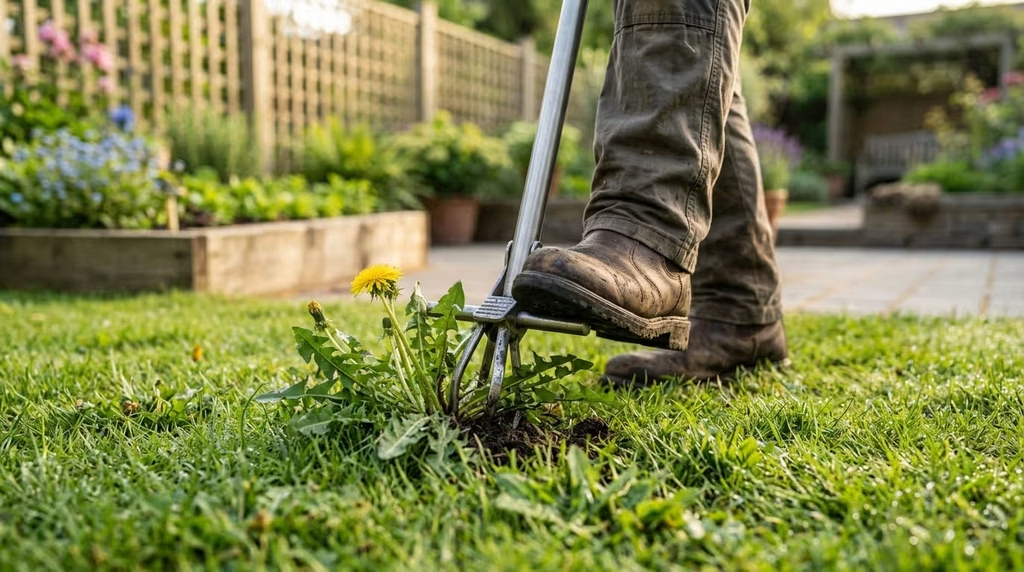
A Stand-Up Weed Puller Lifting a Weed and Its Root from the Lawn
Why Pulling Weeds by Hand Usually Fails
Many weeds have a taproot or thick crown, so pulling the leaves snaps the plant at the neck and any root left behind regrows. Dry soil grips even harder, and bending for an hour wears most people out before the job is done. A puller reaches below the crown, grips the root and, in the better designs, lets you work standing up.
What Is a Weed Puller?
A weed puller is a manual tool built to remove weeds together with their roots, without a spade or a lot of digging. Most designs work on the same idea. A narrow tip, claws or a hooked blade goes into the soil beside the weed, grips the root zone, and lifts the plant out in one piece. The better designs then eject the weed so you do not have to touch it.
You will meet three broad families:
- Stand-up pullers. A long handle, a foot plate and claws or prongs at the bottom. You work upright.
- Hand-held pullers. Short-handled tools you use while kneeling or crouching. They are precise and cheap.
- Lever and step-on pullers. Long steel shafts or twisting tools that use leverage and body weight to pop out deep roots.
In everyday conversation people also call these tools pullers, weed removers, weeders, root pullers or “weed poppers.” The names overlap, so judge a tool by its mechanism rather than its label.
How a Weed Puller Works (The Simple Mechanics)
You do not need an engineering degree to see why these tools beat bare hands.
- Penetration. The tip or claws slide into the soil beside the root with little force.
- Grip. The claws close around the root zone, or a notch or hook holds the root so it does not snap.
- Leverage. You pull back on the handle, which lifts the weed and its root together. Many stand-up tools also use your body weight through a foot plate.
- Ejection. On many claw designs, a slider or plunger pushes the weed out of the claws when you release it.
Put together, you get a low-effort, repeatable motion. Gardening reviewers who test these tools commonly compare claw count, ejection, foot plate size and handle comfort. Those four things explain most of the difference in performance.
Types of Weed Puller (and What Each Does Best)
1. Stand-Up Claw Puller
The classic “no bend” tool. A long shaft, a foot plate and three or four steel claws. You step on the plate to push the claws into the ground, pull the handle back to close them around the root, lift, and then push a slider to eject the plant.
- Pros: No kneeling, quick on lawns, good for dandelions, clover and plantain.
- Cons: Heavier, can leave small holes in turf, and works best in soft or damp soil.
- Best for: Lawn weeds and large areas.
2. Four-Claw vs. Three-Claw Designs
Claw count matters. Reviewers commonly report that four-claw designs grip both large and small weeds better, while designs with fewer claws can slip off thin or round roots. If you have a mix of weed sizes, four claws are usually the safer choice.
3. Step-and-Twist Pullers
These have a spiral or twisting head. You push the head into the soil with your foot, twist the handle to wind the root up, and pull it out. They can be good value and work well on small to medium weeds, though they may be less comfortable on very hard soil.
4. Long-Handled Lever Pullers (Straight-Shaft Types)
A long steel shaft with a V-shaped or notched tip and a foot step. You push the tip down beside the root, lean the handle back and lever the root up. Simple, strong and a favourite for deep roots in firm ground.
5. Hand-Held Pullers
Short tools with a wooden or plastic handle and a forked, notched or claw-style tip. They give excellent control in flower beds, vegetable rows and raised beds, but you need to kneel or crouch.
6. Grampa’s Weeder-Style Pullers
A famous minimalist design: a long wooden handle, a steel shaft and a forked tip with a foot lever. It has been sold for decades and is often described as simple and durable. It does not eject weeds automatically, so you pull the plant off by hand.
7. Heavy-Duty and Large-Root Pullers
Tough, steel designs made for big weeds with deep roots such as thistles. Some resemble a narrow digging tool with a long blade.
8. Powered Options (What Is and Is Not Available)
Searches often include “power weed puller,” “electric puller” and “weed puller machine.” As far as I know, most powered garden tools cut, burn or scrape weeds rather than lift roots intact. String trimmers cut tops, flame and electric weeders scorch foliage, and tillers churn the soil. Large agricultural and brush-removal equipment exists, but it is a different job from lifting a dandelion from a lawn. If you want roots out whole, a manual puller is still the most reliable choice for home gardens. Check any listing carefully, and read the description to see whether it truly removes roots.
Weed Puller Types Compared: Four-Claw, Step-and-Twist, Lever and Hand-Held
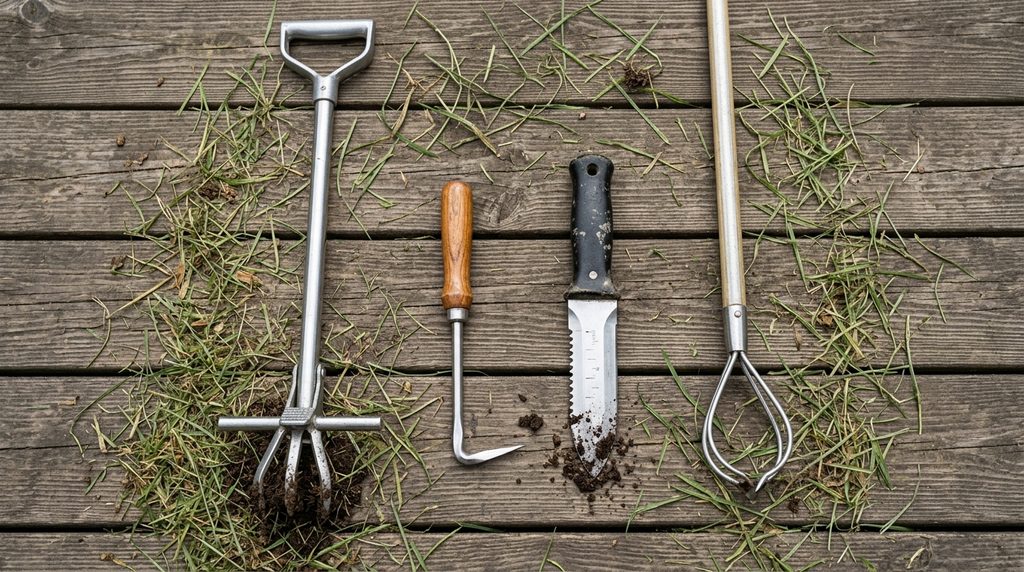
Stand-Up vs. Hand-Held: Which Is Right for You?
Quick self-check: big lawn full of dandelions or sore knees, choose a four-claw stand-up tool. Tight beds and raised beds, choose a hand-held puller. Heavy clay or stones, choose a sturdy steel lever tool. Both lawn and beds, own one of each.
| Feature | Stand-Up Puller | Hand-Held Puller |
|---|---|---|
| Price | Medium | Low |
| Bending required | None or little | Yes |
| Speed on a big lawn | Fast | Slow |
| Precision in beds | Fair | Excellent |
| Soil disturbance | Moderate | Small |
| Storage | Bulky | Easy |
| Best for | Lawns and large areas | Beds, rows and containers |
Anatomy of a Good Weed Puller
Understanding the parts helps you judge quality before buying.
- Claws, prongs or tip: Steel claws should be sharp, strong and well-spaced. A notched or forked tip works on taproots.
- Ejection mechanism: A slider, plunger or release lever that pushes the weed out of the claws.
- Foot plate or step: A wide, non-slip plate is easier on the foot. Tiny plates can be uncomfortable.
- Shaft: Steel is strong, aluminium is lighter, wood is light but needs protection from moisture.
- Handle: A T-handle, D-grip or ergonomic grip makes twisting and pulling easier.
- Joints and fasteners: Where parts connect is the most common failure point on cheap tools.
- Detachable or telescoping sections: Some models come apart for storage or adjust to your height.
Anatomy of a Stand-Up Weed Puller: Claws, Ejector, Foot Plate and Handle

Popular Brands and Models You Will See
Searches for these tools are full of brand names. Here is what they mean in plain language. Designs and availability change, so always check the current product page and recent reviews.
- Fiskars. Its stand-up four-claw weeder is the one most often named in “best overall” lists. It is sold in several versions, including a four-claw stand-up model with a slider ejector and a handle designed for comfort. Some listings call it a “Xact” or “deluxe” version. Spelling varies in searches, with many people typing “Fiskar” or “Fiskers.”
- Grampa’s Weeder. A minimalist wooden-handled design with a forked tip and foot lever, made in the United States and sold under spellings such as Grampa’s, Grandpa’s and Grandpas.
- Garden Weasel. Known for its step-and-twist style puller.
- Radius Garden. Makes ergonomic tools, including a large-weed digger.
- Landzie. Sells long steel-shaft weeders marketed as sturdy.
- Walensee. A budget stand-up option.
- Corona, Ames, Gardena, Scotts and Alterra. Established garden-tool and lawn brands that appear in retail listings. Check the exact model before comparing.
One caution: If a listing claims “vintage” or “antique,” confirm condition and whether the design suits today’s soil and turf before paying collector prices.
How to Choose the Best Weed Puller
Run through this checklist before buying.
- Pick the type first. Stand-up for lawns, hand-held for beds, lever tool for deep roots.
- Count the claws. Four claws usually hold more weed sizes than three.
- Check the ejection system. If you hate touching weeds, choose a model with a slider or plunger.
- Look at the foot plate. A wide, grippy plate is more comfortable, especially in sandals or soft shoes.
- Check the steel. Thicker, hardened steel resists bending. Thin stamped metal can bend on the first stubborn root.
- Think about weight. Lighter is better for long sessions, but flimsy plastic parts can fail.
- Check the handle. A T-handle or ergonomic grip makes the twisting motion easier.
- Look for detachable sections. Handy for storage and for transport.
- Match the tool to your soil. Soft, damp soil suits claw tools. Heavy clay and stones need a sturdier build.
- Read the warranty and recent reviews. Look for comments about bending, jamming and handle loosening.
Choosing a Weed Puller: Checking Claws, Steel and Foot Plate in the Shop

Where to Buy a Weed Puller (and What About “Near Me”?)
If you are searching for a puller nearby, you have a few practical options.
- Home improvement stores. Big chains such as Lowe’s, Home Depot, Ace Hardware and Menards often carry stand-up and hand-held models in the garden tool aisle, though stock changes with the season.
- Farm and general stores. Tractor Supply and similar stores sometimes stock sturdier or heavy-duty versions.
- Discount and big-box retailers. Walmart, Harbor Freight and seasonal aisles at stores such as Aldi can have budget options.
- Independent garden centres and hardware shops. Often the best place to try a tool in your hand.
- Online retailers. The widest selection, including the long-handled and detachable models.
Quick tip: Check the store’s website or call ahead to confirm local stock before driving over. If you need a specific model, ordering online is usually easier.
When Is the Best Time to Use a Weed Puller?
Timing matters more than most people expect.
- After rain, or after watering. Damp soil releases roots far more easily. If it has not rained, soak the area for half an hour first.
- Early spring. Young weeds have short roots and come out cleanly.
- Before flowering and seeding. This stops thousands of seeds spreading.
- Early autumn. A second flush often appears, and pulling it before winter reduces next year’s crop.
- Morning or evening. Cooler temperatures are kinder to you and to the soil.
The worst time? Bone-dry, baked soil in midsummer. Roots snap, claws skip and everyone loses.
How to Use a Weed Puller: Step-by-Step
Here is the technique for a standard stand-up claw tool. Hand-held and lever tools follow similar steps.
- Dampen the soil. Water if it has not rained recently.
- Wear sturdy shoes and gloves. You will be pressing with your foot.
- Position the claws over the centre of the weed. The root runs straight down from the middle of the leaf cluster.
- Step on the foot plate. Push the claws into the soil so they surround the root. Go as deep as the tool allows.
- Pull the handle back. The claws close around the root zone.
- Lift slowly. A steady, upward pull keeps the root in one piece. Yanking is the fastest way to break it.
- Eject the weed. Push the slider or plunger to drop the plant into a bucket or onto a tarp.
- Check the hole. A clean, full-length root is the goal. If it broke, dig out what remains with a hand tool.
- Fill and firm the hole. Add a little soil or compost, press it down and sprinkle grass seed on lawns.
- Dispose of the weeds. Bin anything with flowers or seed heads instead of adding it to a cold compost heap.
Step-by-Step: Using a Stand-Up Weed Puller from Insert to Eject

What to Do After You Pull the Weeds
Pulling is only half the job. Fill the holes, overseed thin patches, mow a little higher so taller grass shades the soil, mulch beds, and walk the yard weekly with your tool. Corn gluten meal is sometimes used in spring and autumn to reduce germination, but it also stops grass seed sprouting, so skip it if you plan to overseed.
DIY and Homemade Weed Pullers: Worth It?
People often search for a DIY version. Homemade tools are usually old forks or flat blades used to lever out roots, and they can work for a few small weeds. They rarely have a proper foot plate, ejector or tested strength, and they can bend or break at the worst moment. For regular weeding, a purpose-built tool is safer and not expensive. If you do try a homemade one, wear sturdy shoes and gloves and keep your feet clear.
Common Mistakes to Avoid
Even experienced gardeners trip over these.
- Weeding dry, hard soil. Roots snap and claws bounce.
- Pulling too fast. A slow lift keeps the root whole.
- Choosing the wrong tool for the weed. Claws struggle with very deep taproots.
- Buying the cheapest, flimsiest model. Thin metal bends and plastic joints fail.
- Skipping the ejector or ignoring jams. Clear soil from the claws regularly.
- Leaving roots in the hole. Dig out leftovers with a hand tool.
- Composting weeds with seed heads. Cold compost will not kill them.
- Ignoring weeds until they flower. Early action saves time later.
- Leaving holes unfilled. Bare soil is an open invitation to new weeds.
- Forgetting maintenance. Rust and dried soil make tools harder to use.
Maintenance and Care: Keep Your Weed Puller Working
A good tool can last for many seasons with simple care.
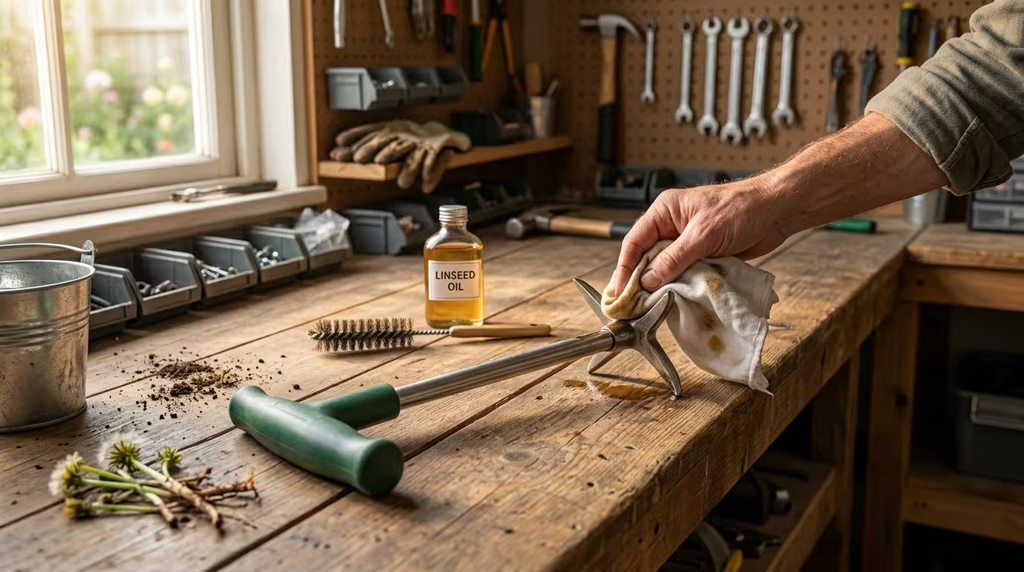
- Clean after each use. Brush or rinse off soil, especially around the claws and ejector.
- Dry thoroughly. Moisture rusts steel.
- Wipe the metal with a light coat of oil. Vegetable or machine oil protects it.
- Lubricate moving parts. A drop of oil on the slider or plunger keeps it smooth.
- Sharpen claw tips if they dull. A few strokes with a small file helps them bite.
- Check bolts and joints. Tighten fittings and replace worn parts.
- Protect wooden handles. A rub of linseed oil once or twice a year stops cracking.
- Store it dry. Hang it in a shed or garage.
Cleaning and Oiling a Weed Puller After Use
Frequently Asked Questions
What is a weed puller?
It is a manual tool that removes weeds together with their roots. Designs include stand-up claw tools, hand-held tools and long lever tools.
How do you use a puller?
Dampen the soil, position the tool over or beside the weed, push it into the soil, pull the handle to grip the root, lift slowly, then eject the weed and fill the hole.
What is the best weed puller?
It depends on your soil, lawn size and comfort. A four-claw stand-up tool suits most lawns, while hand-held tools suit beds and tight spaces. Check current reviews before buying.
How do I use a Fiskars puller?
Place the claws over the weed, step on the foot plate to push them into the soil, pull the handle back to grip the root, lift, then slide the ejector to release the weed. Follow the instructions for your exact model.
Is there a power or electric puller?
Most powered garden tools cut, burn or scrape weeds rather than lifting roots intact. For removing roots whole in home gardens, a manual puller is still the most reliable option. Read listings carefully.
Will weeds grow back after I use a puller?
Not from the same root if you remove it fully. New plants can still grow from seeds in the soil, so fill the holes, overseed lawns and weed early.
Can a puller remove crabgrass?
Yes, if you lift the whole clump and its roots, ideally before it sets seed. Check the hole for rooted nodes.
Can I make a homemade puller?
You can modify an old tool to lever out small weeds, but homemade versions usually lack a foot plate, ejector and tested strength. A purpose-built tool is safer and more durable.
Where can I buy a weed puller near me?
Home improvement stores, farm stores, garden centres and discount retailers often stock them, and online retailers have the widest range. Check local stock before you go.
Final Thoughts: Let the Tool Do the Bending
Weeds are stubborn because the real plant is underground. A puller is simply the most direct way to reach it: grip the root, lift it whole, and move on without bending over.
Pick a type that suits your lawn and your body, weed when the soil is damp, lift slowly instead of yanking, fill each hole, and keep the tool clean. Do that, and you will spend far less time fighting the same weeds every week.
So here is your challenge: after the next rain, take your puller to the patch that annoys you most and see how many full roots you can lift in ten minutes. Then count them. You may be surprised.
Which type of puller are you thinking of trying, and where are your weeds growing? Tell us in the comments and we will help you choose.
Sources used for research: