🌿 Your trusted guide to choosing the best garden tools.

Hand Weeder: The Complete Guide to Choosing, Using and Caring for This Essential Garden Tool

You spot it on a Saturday morning: a dandelion sitting right in the middle of your prettiest flower bed, leaves spread wide, already pretending it belongs there. You tug it. The leaves snap off in your fingers, the root stays buried, and by next week the dandelion is back, bigger and smugger than before.
Sound familiar? That frustration is exactly why the hand weeder exists. It is a small, simple, inexpensive tool, and yet it is the difference between snapping a weed at the surface and lifting the whole thing out, taproot and all.
In this guide you will learn what a hand weeder really is, how the different designs work, which one suits your soil and your weeds, and how to use it without wrecking your back or your neighbouring plants. By the end you will be able to answer one question with confidence: which tool should I reach for, and why?
want to know about plants.
A Hand Weeder Lifting a Dandelion with Its Full Taproot Intact
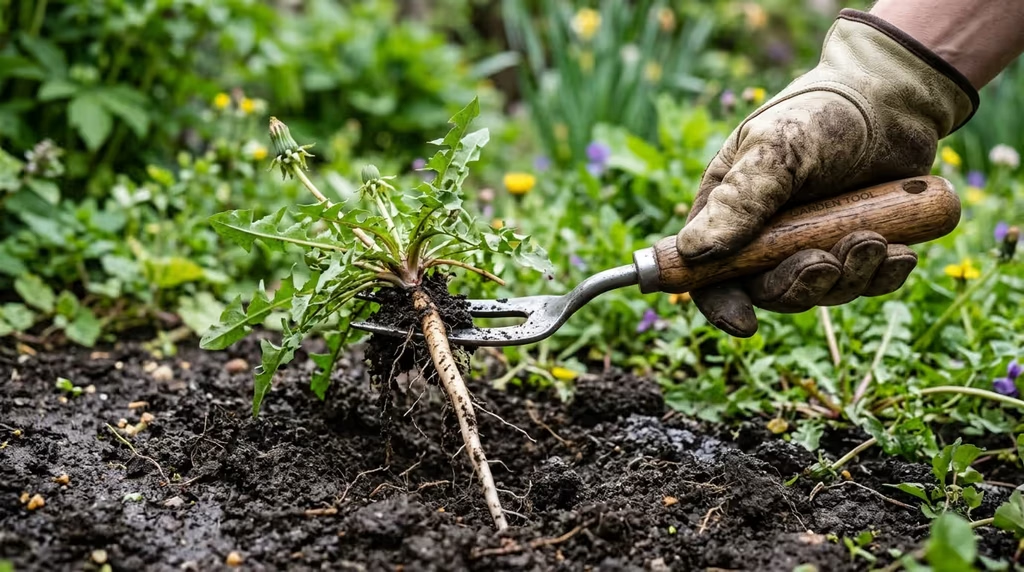
What Is a Hand Weeder?
A weeder is a short, hand-operated garden tool designed to loosen the soil around a weed and lever it out of the ground along with its roots. It is roughly the size of a hand trowel. It has a grip at one end, a metal shaft, and a working tip that is usually forked, notched or blade-shaped.
You will see it sold under several names: hand weeder tool, hand-held weeder, manual hand weeder, or simply “weeder”. They all describe the same idea. The tool is held in one hand while the other hand steadies the weed, and the shaft works as a lever to pry roots free.
Why does that matter? Because most stubborn weeds, such as dandelions, docks and thistles, store energy in a long taproot. Snap that root and the plant regrows from whatever remains underground. A well-used weeder removes the root, which is what actually stops regrowth.
Quick answer for busy readers: a weeder is the best tool for pulling individual weeds, working between closely planted flowers or vegetables, and weeding in tight spots where a hoe would damage your crops.
Weeder vs. Other Weeding Tools: Quick Comparison
Not sure whether you need a weeder, a trowel or a hoe? This table shows where each one shines.
| Tool | Best For | Reach | Precision | Back Strain |
|---|---|---|---|---|
| Hand weeder | Single weeds, taproots, tight beds | Short | Very high | Higher (you kneel or bend) |
| Hand trowel | Planting, digging holes | Short | Medium | Higher |
| Hori hori knife | Cutting roots, digging, dividing | Short | High | Higher |
| Hand hoe | Shallow seedlings in open soil | Short | Medium | Higher |
| Standing (long-handled) weeder | Dandelions and taproots without bending | Long | Medium | Low |
| Draw or Dutch hoe | Large, weedy areas of shallow weeds | Long | Low | Low |
The lesson: no single tool wins every job. A weeder trades reach for precision, and in a crowded garden bed, precision wins.
Anatomy of a Hand Weeder
Understanding the parts helps you judge quality before you buy. Here is what you are looking at:
- Handle (grip): Wood, plastic or rubberised. A comfortable, non-slip grip matters more than most buyers realise, because weeding means repeated wrist movement.
- Shank or shaft: The metal rod connecting handle and tip. It should be strong enough to take your weight without bending.
- Ferrule or tang: The joint where the metal enters the handle. A weak joint is the most common failure point on cheap tools.
- Working tip (head): The business end. This may be a forked tine pair, a flat notched blade, a curved blade or a pointed spike.
- Fulcrum or heel (on some models): A small raised bar or bend on the shaft that rests on the soil and acts as a pivot, giving you extra leverage to lift roots.
- Material: Carbon steel is tough and holds a sharp edge but needs drying and oiling. Stainless steel resists rust and is easier to maintain. Cast aluminium is lightweight but can bend in heavy clay.
Anatomy of a Hand Weeder: Handle, Shank, Fulcrum and Forked Tip

Types of Hand Weeders (and When Each One Wins)
Walk into any garden centre and you will find several designs hanging side by side. Here is what separates them.
1. Forked (Dandelion) Weeder
The classic. Two prongs at the tip slide down either side of a taproot, and you press the handle down to lift. It is perfect for dandelions, plantain and young docks in lawns and beds. It struggles with dense, matted weeds.
2. Cape Cod Weeder
Named after the region where it became popular, this tool has a flat, right-angled blade with a pointed tip. You pull it toward you just under the soil surface to slice through young weeds and dig out small roots. It is excellent for tight rows and raised beds, and it is built for right-handed or left-handed variants, so check which one you are buying.
3. Fishtail (Notched Blade) Weeder
A narrow, flat blade ending in a V-shaped notch, like a fish’s tail. The notch gets around the root and pries it upward. Many gardeners love it for paving cracks and gravel paths too.
4. Hand Hoe and Japanese Weeding Sickle
A small blade set at an angle, sometimes shaped like a sickle. It scrapes and slices shallow weeds on the surface. Fast for large patches, but less effective for deep taproots.
5. Knife-Style Weeder (Hori Hori Type)
A strong, narrow blade with one serrated edge and one sharp edge. It cuts through tough roots and digs deep. It is not a pure weeder, but many people keep one as an all-rounder.
6. Crack and Patio Weeder
A hooked or angled tip designed to scrape moss and weeds out of paving joints. Different job, same family.
7. Ergonomic and Fulcrum-Style Models
Modern designs add soft-grip handles, wrist-friendly angles or a built-in pivot. These are especially worth considering if you weed for long sessions or have sensitive joints.
Common Hand Weeder Types Side by Side: Forked, Cape Cod, Fishtail and Hand Hoe

What Is a Hand Weeder Used For?
Beyond the obvious, a weeder earns its place in your toolkit in several ways:
- Removing taprooted weeds such as dandelion, dock, thistle and chicory
- Weeding between closely planted flowers and vegetables without disturbing their roots
- Clearing weeds from raised beds and containers
- Working around delicate seedlings where a hoe would cause damage
- Digging out weeds in paving cracks, gravel and edges
- Lifting young annual weeds before they set seed
One honest limit: weeds that spread by creeping underground stems (rhizomes), such as bindweed, couch grass and ground elder, can regrow from small fragments. A weeder helps, but you will need patience, repeat visits and careful root removal. More on that in the tips below.
Who Should Use a Hand Weeder?
Ask yourself: does this sound like my garden?
- Flower bed gardeners who have plants packed close together
- Vegetable growers with raised beds or tight rows
- Organic gardeners who prefer not to use herbicides
- Lawn owners with scattered broadleaf weeds
- Small-space and balcony gardeners with containers
- Anyone who enjoys careful, hands-on work (some people find weeding oddly relaxing)
If your garden is a large open plot with thousands of tiny weeds, a long-handled hoe will cover ground faster. If you have a bad back, consider a standing weeder, or pair your weeder with a kneeling pad.
How to Choose the Best Hand Weeder
“What is the best weeder?” is the question gardeners ask most, and the honest answer is: it depends on your weeds, soil and hands. Gardening experts who review these tools tend to agree that no single design is best for every situation. Use this checklist to narrow it down.
- Match the head to your weeds. Taproots need a forked or notched head. Shallow annuals suit a Cape Cod weeder or hand hoe.
- Check your soil. Heavy clay demands a strong steel shaft. Light sandy soil works with almost anything.
- Test the grip. If you can, hold it. Does it fit your hand? Does it feel slippery? A good handle prevents blisters.
- Look at the steel. Forged or thick-gauge steel resists bending. Thin, stamped metal bends the first time it meets a stubborn root.
- Consider left or right hand. Some blades, especially Cape Cod styles, are handed.
- Think about weight. Lighter tools reduce fatigue, but too light can mean flimsy.
- Check the warranty. A lifetime warranty suggests the maker trusts the build.
- Set a realistic budget. A solid hand weeder does not need to be expensive, but the cheapest ones often bend or snap.
Well-known names to browse: Fiskars, Ames, Corona, DeWit, Niwaki, Draper and Spear & Jackson all make popular models. Always check current reviews and specifications before buying, because designs and availability change.
Testing the Grip and Steel Quality Before Choosing a Weeder

Which Weeder Is Right for You? (Quick Self-Check)
Answer honestly and see where you land:
- “My enemy is dandelions in the lawn.” Choose a forked weeder, or a standing version if bending is a problem.
- “I garden in raised beds with tight rows.” Choose a Cape Cod weeder.
- “I have heavy clay.” Choose a forged steel, forked model, or a hori hori style knife.
- “I weed paving and gravel.” Choose a fishtail or crack weeder.
- “My hands get sore quickly.” Choose an ergonomic, soft-grip hand-held weeder.
- “I want one tool that does everything.” Choose a hori hori style weeder-knife as your all-rounder.
Tell yourself which one fits, and you have already made the hardest part of the decision.
How to Use a Hand Weeder (Step by Step)
Using a weeder is simple, but a few details make the difference between a clean pull and a snapped stem.
- Water first, or wait for rain. Moist soil lets roots slide out. Dry, hard soil snaps them. Weeding the day after rain is the gardener’s secret.
- Put on gloves and get comfortable. Wear sturdy gloves and use a kneeling pad or low stool to protect your knees and back.
- Identify the weed. Is it a taprooted weed (dandelion, dock) or a spreader (bindweed, couch grass)? This decides how deep you need to go.
- Position the tool. Hold the weed gently at its base with your free hand. Push the tip of the weeder into the soil a few centimetres away from the stem, angled slightly toward the root. About 3 inches (8 cm) away at roughly 45 degrees is a good starting point.
- Loosen the soil. Wiggle the tool to break the soil’s grip around the root.
- Lever, don’t yank. Push the handle down toward the soil. The shaft acts as a lever, and a fulcrum or heel, if your tool has one, gives extra lift. Pull the weed upward at the same moment.
- Work around stubborn roots. If the weed won’t budge, loosen the soil in a circle around it rather than pulling harder.
- Check the hole. Look for leftover root pieces. Dig them out, especially with weeds that regrow from fragments.
- Firm the soil. Press the soil back down and top up with mulch. Bare soil invites new weeds.
- Dispose of weeds properly. Bin or hot-compost anything with seed heads or persistent roots.
Step-by-Step: Levering a Weed Out with a Hand Weeder

Pro Techniques Most Guides Skip
- Weed little and often. Ten minutes after a rain beats a four-hour battle in August.
- Take weeds before they flower. Once a weed goes to seed, you are fighting next year’s generation too.
- Work from the outside in. In a crowded bed, start at the edges so you don’t trample what you’ve just cleared.
- Keep the root, not the soil. Gently shake loose soil back into the hole rather than carrying it away. Over time this saves topsoil.
- Slow down on the pull. A slow, steady lift keeps a long taproot in one piece.
Weed-by-Weed Cheat Sheet
| Weed | Root Type | Best Approach with a weeder |
|---|---|---|
| Dandelion | Deep taproot | Forked weeder, loosen all around, lift slowly |
| Dock | Very deep taproot | Strong forked model or knife-style, dig deep |
| Thistle | Taproot plus spreading roots | Dig deep and remove fragments, repeat visits |
| Plantain | Fibrous, shallow | Forked or fishtail, easy in moist soil |
| Chickweed | Shallow, spreading | Cape Cod weeder or hand hoe, remove before seeding |
| Crabgrass | Fibrous, spreading | Lift whole clump, check for rooted nodes |
| Bindweed | Deep, creeping roots | Dig out as much as possible, persistence needed |
| Couch grass | Creeping rhizomes | Fork out every white rhizome piece |
Maintenance and Care: Keep Your Hand Weeder Working for Years
A good tool lasts decades if you give it five minutes of care after each session.
- Brush off the soil. Wet soil left on metal encourages rust.
- Rinse and dry thoroughly. Moisture is the enemy of carbon steel.
- Wipe with a little oil. A light coat of vegetable or machine oil protects the blade.
- Sharpen the edge. For Cape Cod and notched blades, a few strokes with a small file keep the cutting edge crisp.
- Treat wooden handles. A rub of linseed oil once or twice a year stops cracking.
- Store it dry. Hang it in a shed or keep it in a bucket of oiled sand.
- Inspect the joint. If the ferrule loosens, repair or replace before it fails mid-pull.
Cleaning and Oiling a Hand Weeder After Use
