🌿 Your trusted guide to choosing the best garden tools.

Hori Hori Knife: The Japanese Garden Tool That Digs, Cuts, Saws and Measures

Picture your usual gardening session. You start with a trowel, then realise you need snips for a root, a saw for a tough vine, a ruler for the bulb depth, and something sharp to open the compost bag. By the time you have found everything, the tea is cold and the weeds are still there.
Now picture one tool that does all of it. It digs the hole, slices the root, saws the vine, shows the depth and splits the bag. That is the promise of the hori hori knife, and it is why this unusual Japanese blade has gone from a niche curiosity to a favourite in gardens all over the world.
In this guide you will learn what the tool is, where the name comes from, how it differs from a trowel, which materials and brands are worth considering, and exactly how to use it safely. We will also cover the things many articles skip: sharpening, sheath choice, left-handed use, travel rules and how to buy one locally or online without wasting money.
Quick question before we begin: what is your biggest gardening headache right now: stubborn weeds, heavy clay, crowded perennials, or planting lots of bulbs? Keep your answer in mind, because there is a section for each.
want to know about Japanese blade
A Stainless Steel Hori Hori Knife Ready for Garden Work

What Is a Hori Hori Knife?
A hori hori knife is a traditional Japanese gardening tool with a long, narrow, slightly concave blade, a pointed tip and a sturdy handle. One edge of the blade is smooth and sharp, and the other is serrated. Most blades are around 6 to 7 inches long, and many have depth markings etched into the metal.
The name comes from the Japanese verb “horu”, meaning to dig. Repeating the word, “hori hori”, is a playful way of imitating the sound of digging, and the tool has been used for generations in vegetable plots, mountain foraging and bonsai care. You may also see it called a hori knife, a Japanese garden knife, a weeding knife, or, in the West, a soil knife.
Why has it become so popular? Four main reasons:
- One tool, many jobs. It replaces a trowel, weeder, small saw and ruler.
- Strength. The blade is thicker and tougher than a typical trowel, so it copes with firm soil and roots.
- Precision. The narrow blade slips between plants without disturbing their neighbours.
- Less bending and fewer tool changes. You keep working, and your back thanks you.
If you have wondered whether you really need one, the honest answer is that you can garden without it, but once you try it, it is hard to go back to a trowel alone.
Hori Hori Knife vs Other Garden Tools
New gardeners often ask how this tool compares with the basics. Here is a quick look.
| Tool | Best for | Blade shape | Cuts roots? | Measures depth? | Handles firm soil? |
|---|---|---|---|---|---|
| Hori hori | Digging, weeding, dividing, planting, cutting | Narrow, concave, two edges | Yes | Often | Excellent |
| Hand trowel | Scooping soil, planting larger plants | Wide, curved scoop | No | Rarely | Moderate |
| Weeding fork | Lifting taproots | Forked tines | No | No | Moderate |
| Folding pruning knife | Cutting stems and vines | Short folding blade | Stems only | No | Poor |
| Bulb planter | Large bulbs | Cylindrical plug | No | Sometimes | Medium |
The takeaway: a trowel moves soil, while this blade digs, cuts and measures. If you can own only one hand tool, many gardeners argue the hori hori knife is the more useful first buy.
Anatomy of a Hori Hori Garden Knife
Knowing the parts helps you judge quality before you buy.
- Blade. Concave so it can scoop and cut. Stainless steel resists rust, and carbon steel takes a sharper edge but needs more care.
- Edges. One straight edge for slicing and one serrated edge for sawing through thicker roots and twine.
- Tip. Pointed so it can break into compacted ground.
- Depth markings. Etched lines that take the guesswork out of planting bulbs.
- Tang. The part of the blade that runs into the handle. A full tang is stronger than a short one.
- Handle. Hardwood, rubber, plastic or composite. Choose one that stays secure when wet.
- Sheath. Leather or nylon. It protects both you and the blade.
- Hanging hole or lanyard loop. A small feature that makes storage easier.
Parts of a Japanese Garden Knife Explained

What Is a Hori Hori Knife Used For?
Most people expect it to dig, but the job list is much longer.
- Digging planting holes for seedlings, herbs and perennials.
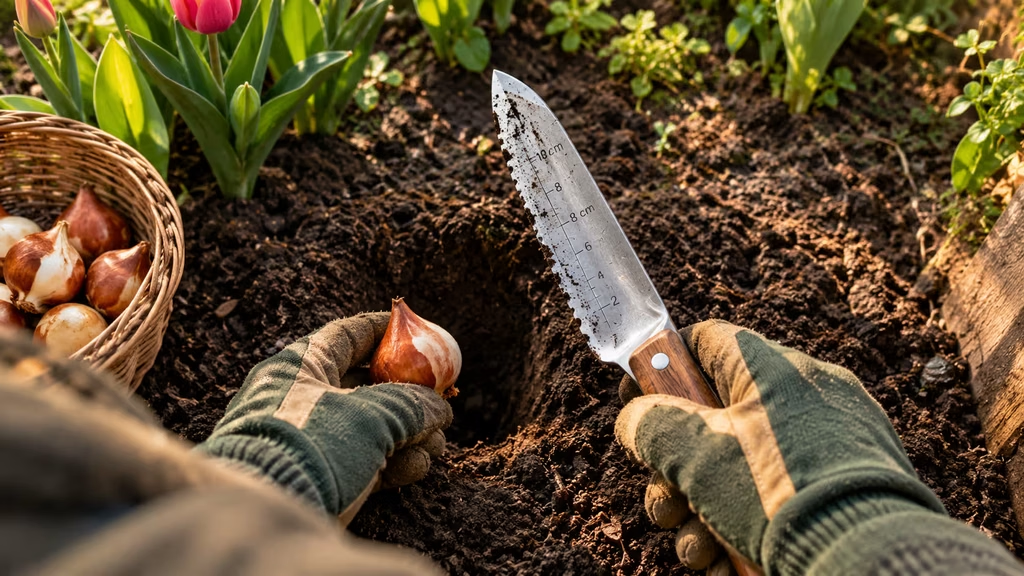
- Planting bulbs at accurate depths using the markings on the blade.
- Weeding. Slide the tip beside a dandelion, loosen the soil and lift the root whole. This is why many people call it a hori hori weeding knife.
- Dividing perennials such as hostas, daylilies and ornamental grasses.
- Cutting sod and creating neat lawn edges.
- Cutting and sawing roots that stop a trowel in its tracks.
- Opening bags of compost, mulch and potting mix, and cutting twine or plant ties.
- Harvesting root vegetables, salad leaves and herbs.
- Transplanting seedlings with a good root ball.
- Making seed furrows for sowing in straight rows.
- Repotting. Loosen a tight root ball and trim dead roots.
- Foraging and fieldwork. Foragers use it for roots and wild greens, and some field researchers use a hori hori digging knife for taking soil samples.
Who Should Use a Hori Hori Knife?
It is a good fit for:
- Vegetable and allotment growers who work firm or clay soil.
- Perennial gardeners who divide and move plants regularly.
- Landscapers and professionals who want one dependable tool.
- Container gardeners who need control in tight spaces.
- Beginners who want one solid tool rather than a drawer full of cheap ones.
- Bonsai and rock garden enthusiasts who need a narrow blade for precise work.
- Outdoor fans and foragers who want a rugged digging blade.
If you only grow a few pots on a windowsill, a trowel might be enough. But once you deal with real soil and real roots, this tool begins to earn its place.
Types of Hori Hori Knives: Which One Fits You?
Traditional Japanese models
Authentic Japanese versions, such as those from Nisaku, usually have a rust-resistant stainless steel blade, a wooden handle and a simple leather or nylon sheath. They are praised for craftsmanship and a clean, concave blade shape.
Stainless steel hori hori knife
A stainless steel hori hori knife resists rust and wipes clean easily, which is ideal in damp climates or if you forget to dry your tools. The trade-off is that some stainless blades may need touching up more often than carbon steel.
Carbon steel models
Carbon steel holds a very sharp edge and cuts through roots effortlessly. It will rust if left wet, so it needs wiping and a light coat of oil.
Wooden-handle versions
Warm, comfortable and attractive. They need occasional oiling and should not be left soaking.
Rubber and composite handle versions
Non-slip, weatherproof and easy to clean. These suit wet climates and heavy use.
Heavy-duty and professional models
Thicker blades and reinforced tangs, built for daily use by landscapers.
Budget-friendly alternatives
Brands such as Fiskars offer hori hori-inspired planting knives at lower prices. They are a good way to try the concept before investing in a premium blade.
Compact versions
Shorter blades fit in a pocket or small bag, which suits travel and light work.
Popular Hori Hori Knife Brands Compared
Gardeners often search by brand, so here is a neutral overview of names you will keep seeing. Models, materials and sheaths change over time, so always check the current product page and recent reviews before buying.
| Brand | What it is known for | Good fit for |
|---|---|---|
| Nisaku | Japanese-made, traditional stainless steel and wood designs | Gardeners wanting an authentic tool |
| Niwaki | Specialist retailer of Japanese garden tools, often praised for quality | Gardeners who value craftsmanship |
| Fiskars | Affordable, lightweight, planting-knife style with a well-known warranty | Beginners and budget buyers |
| Truly Garden | Often noted for its leather sheath and good edge retention | All-round home use |
| Garden Guru | Popular hardwood-handled model, frequently recommended for weeding | Weeding and general work |
| Barebones | Heavier, rugged builds, often named in best-of lists | Heavy-duty digging |
| Lesche and other marketplace brands | Budget options sold through online marketplaces | Trying the tool cheaply |
Honest advice: a famous name does not guarantee the best fit. Handle shape, blade weight and sheath quality matter as much as the label, so read reviews that mention long-term use rather than first impressions.
Traditional, Stainless Steel and Budget Hori Hori Knives Compared

How to Choose the Best Hori Hori Knife: A 7-Step Checklist
Searching for the best hori hori knife can be overwhelming, so use this checklist instead of chasing a single winner.
- Match your soil. Light soil works with almost any blade. Heavy clay or stony ground needs a thicker blade with a full tang.
- Pick the steel. Stainless for low maintenance, carbon for sharpness and a willingness to oil.
- Check the blade length. Six to seven inches suits most gardeners. Shorter is easier in pots, longer digs deeper.
- Look for depth markings. They are cheap, practical and brilliant for bulbs.
- Test the handle. It should feel secure without pressure points, and smaller hands may prefer a slimmer grip.
- Inspect the sheath. A good sheath is stitched or moulded well, closes securely and keeps the blade covered.
- Think about weight. If it feels heavy after ten minutes, it will stay in the shed.
Pro tip: if you are unsure, start with a mid-priced stainless steel model with a hardwood handle and a decent sheath. It covers almost every job.
Is a Hori Hori Knife Worth It? Pros and Cons
Before you spend any money, weigh the good and the bad honestly.
Pros
- A hori hori knife replaces several small tools, which saves money and shed space.
- It handles firm soil and roots better than most trowels.
- Depth markings make planting more accurate.
- A quality blade can last for many years with simple care.
Cons
- A sharp hori hori knife needs respect, a sheath and sensible storage.
- Cheap versions may bend, rust or loosen at the handle.
- It is not ideal for scooping large volumes of soil, so keep a trowel for big holes.
- Carry rules in some places make travel awkward.
Verdict: for most people who garden regularly, a hori hori knife is worth buying, provided you choose a solid build and look after it. If you garden twice a year, a cheaper model or a trowel is fine. Before you commit, search for a hori hori knife near me on a map app or at a local garden centre, and hold a few in your hand. If stock is limited, a hori hori knife on Amazon or a brand store lets you compare reviews at home.
Where to Buy: Online, Local Shops and “Near Me” Searches
Many shoppers type “near me” into a search box and hope for the best. Here is a practical way to find one.
- Local garden centres and nurseries. Ask at the tools counter. Staff may know the models they stock and can let you hold them.
- Hardware stores and farm supply shops. Often stock budget and mid-range options.
- Specialist tool retailers. Good for Japanese-made blades and premium models.
- Online marketplaces, including Amazon. Convenient for comparing brands, reading reviews and finding sheath bundles. Check seller ratings and look for photos from real buyers.
- Brand websites. Often show the full range, spare sheaths and warranty details.
Buying checklist: confirm blade material, sheath type, return policy and shipping time. If the listing does not state the steel type, ask the seller or choose another model.
How to Use a Hori Hori Knife Step by Step
A hori hori knife is easy to learn, but a few details make it safer and more effective.
- Wear gloves and sturdy shoes. A sharp blade and hard ground deserve basic protection.
- Hold it firmly. Keep your fingers behind the handle guard if there is one, and rest your thumb along the top for control.
- Slide the tip into the soil. Enter at a slight angle rather than stabbing straight down, and rock gently if the ground is firm.
- Scoop or lever. Use the concave blade like a narrow trowel to lift soil away.
- Check the depth. Read the markings against the surface.
- Plant and firm. Place the plant and use the flat side of the blade to push soil back around the roots.
- Weed cleanly. Push the tip down beside the weed, loosen the soil in a circle and pull the whole root out.
- Cut when needed. Slice twine or thin roots with the straight edge, and use the serrated edge with a gentle sawing motion for thicker ones.
- Wipe, dry and sheath. Clean the blade before putting it away.
Left-handed gardener? Most blades are symmetrical, so they work in either hand. The serrations usually sit on one side, so check which edge faces your work and choose the sheath carry that suits you.
Step-by-Step Planting a Bulb with a Hori Hori Garden Knife
Recommended Planting Depth at a Glance
| Plant or job | Approximate depth | Notes |
|---|---|---|
| Tulip and daffodil bulbs | 15 to 20 cm (6 to 8 in) | Pointed end up |
| Crocus and snowdrop bulbs | 5 to 8 cm (2 to 3 in) | Plant in clusters |
| Garlic cloves | 5 cm (2 in) | Space about 10 cm apart |
| Seedling transplants | Same depth as the pot | Firm gently |
| Perennial divisions | Crown at soil level | Water well |
| Seed furrows | 1 to 2 cm (under 1 in) | Draw the tip along a string line |
These are general guides. Always check the plant label, seed packet or local advice, because climate and variety change the ideal depth.
Real-World Scenarios (Pick the One That Matches Yours)
“My soil is heavy clay.” Water the area the day before, slide the tip in at an angle and rock it gently. Do not force a thin blade straight down.
“I need to plant 50 bulbs.” Use the depth markings, and after a few holes the rhythm becomes automatic.
“My hostas are crowded.” Lift the clump and slice it into sections with the straight edge, keeping healthy roots and shoots on each piece.
“I hate dandelions.” Push the tip beside the taproot, loosen and lift. Removing the whole root stops regrowth.
“I’m tidying a lawn edge.” Stretch a string line and cut a vertical slice along it for a crisp edge.
“I’m repotting.” Loosen the root ball and trim dead roots before replanting.
Which one sounds like your garden? Try it on a small patch first, then scale up.
Safety and Carrying Rules Most Guides Skip
A garden blade is still a real blade, so treat it with respect.
- Always use the sheath when walking, travelling or storing the tool.
- Cut away from your body and keep your free hand out of the cutting path.
- Never carry it loose in a bag or pocket.
- Keep it away from children, and supervise older kids.
- Do not use it as a pry bar or screwdriver. Blades can snap.
- Check local laws. Some places restrict carrying fixed blades in public, even for gardening. If you travel with it, check local rules and airline policy, and never pack it in hand luggage on a flight.
- Wear gloves when sharpening.
Sharpening, Cleaning and Care
A sharp blade is a safer blade, because it needs less force.
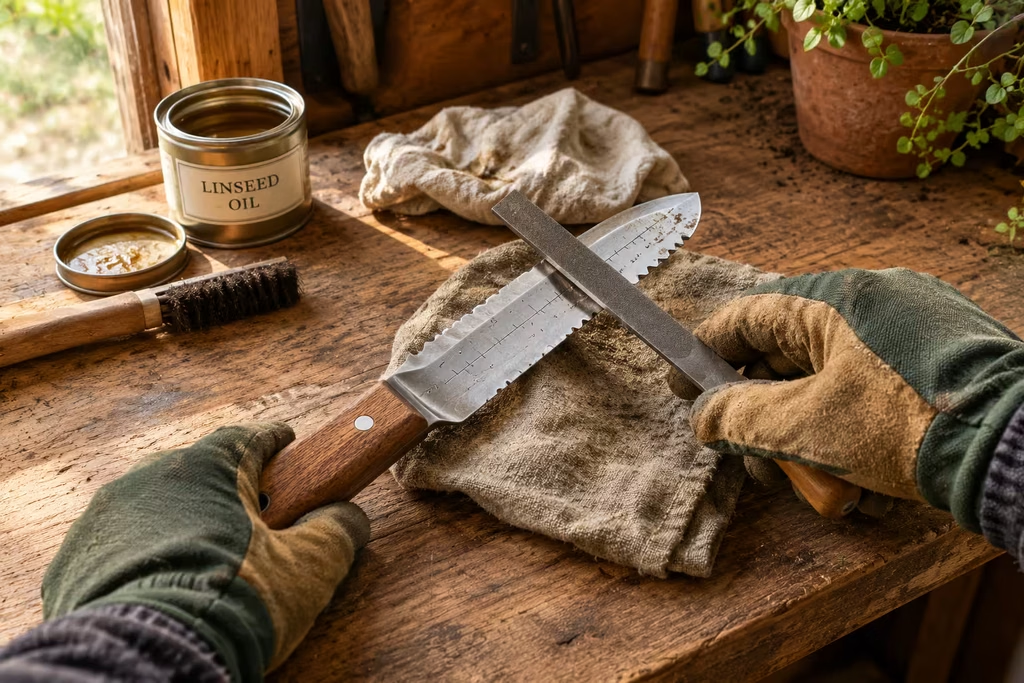
- Clean after each use. Wipe off soil and sap with a damp cloth and dry it completely.
- Oil lightly. A thin film of vegetable or machine oil protects the blade and a wooden handle.
- Sharpen the straight edge. Use a flat file or stone at about 20 to 25 degrees, working from heel to tip. A few passes every few weeks is usually enough.
- Leave the serrations alone, or use a small round file if they dull completely.
- Check the handle. Tighten loose parts and sand rough spots, then oil wood once or twice a year.
- Store dry. Keep the blade in its sheath or hang it on a hook, away from damp floors.
- Disinfect after diseased plants. Wipe with diluted household disinfectant or rubbing alcohol.
Cleaning and Sharpening Your Garden Knife After the Season
A Simple Seasonal Job Calendar
Wondering when the blade earns its keep? Use this as a starting point and adapt it to your climate.
- Early spring. Divide summer-flowering perennials, move crowded clumps and cut fresh edges.
- Mid spring. Transplant seedlings, make seed furrows and dig out early weeds while the soil is soft.
- Summer. Harvest herbs and salad leaves, lift weeds after rain and make holes for late sowings.
- Early autumn. Divide spring-flowering perennials and plant garlic and onion sets.
- Mid to late autumn. Plant spring bulbs and clear spent annuals.
- Winter. Clean, sharpen and oil the blade and check the sheath stitching.
Local weather matters more than the calendar date, so treat this as a guide rather than a rule.
Common Mistakes to Avoid
- Using it as a pry bar. Levering rocks can bend or snap the blade. Dig around the object instead.
- Skipping the sheath. An exposed blade is a risk to you and the tool.
- Pushing straight down in hard soil. Enter at an angle and rock gently.
- Letting it rust. Even stainless steel can stain if left dirty and damp.
- Dull edges. A blunt blade needs more force and slips more often.
- Cutting towards your body. Always direct the blade away.
- Buying the cheapest option. A thin blade with a short tang can bend on the first tough root.
- Ignoring the handle. A slippery or awkward grip causes blisters and accidents.
- Digging when soil is bone dry or soaking wet. Moderately moist soil is the easiest to work.
Dividing Perennials with a Japanese Garden Knife for Healthier Plants

Frequently Asked Questions
What is a hori hori knife?
It is a traditional Japanese garden tool with a concave, double-edged blade used for digging, weeding, cutting roots, planting and measuring depth.
What does “hori hori” mean?
It comes from the Japanese word for digging, repeated to suggest the sound of the action.
What is the difference between a hori hori knife and a soil knife?
They are essentially the same type of tool. Hori hori is the traditional Japanese name, while soil knife is the common Western term. Designs vary slightly between brands.
Is a hori hori better than a trowel?
It depends on the job. A trowel scoops soil and suits larger holes, while this blade cuts, saws and digs in firm soil. Many gardeners keep both.
Which is better: stainless steel or carbon steel?
Stainless resists rust and needs less care. Carbon steel is often sharper but needs oiling. Choose based on your climate and habits.
Which brand is best?
There is no single winner. Nisaku is known for traditional Japanese builds, Fiskars for affordability, and several other brands for sheath quality or weight. Read recent reviews and compare handle shape and blade length.
Where can I buy one near me?
Try local garden centres, nurseries, hardware stores and specialist tool shops, or order from online marketplaces and brand websites. Check stock, return policy and sheath details before buying.
Is it safe for beginners?
Yes, with common sense. Use the sheath, wear gloves, cut away from your body and never use it to pry.
How do I sharpen it?
Use a flat file or stone at roughly 20 to 25 degrees on the straight edge, working from heel to tip, then wipe and oil the blade.
Can I take it on a plane or carry it in public?
Rules vary. Fixed blades are generally not allowed in hand luggage, and some places restrict carrying them in public. Check local regulations and airline rules.
Can children use it?
Only with supervision. It has a real cutting edge, so younger children should use a blunt trowel instead.
Final Thoughts
Not every garden tool needs a battery or a thick manual. Sometimes the best one is a sturdy, well-balanced blade that digs, cuts and measures with ease. Whether you choose a traditional Japanese model, a stainless steel version or a budget-friendly alternative, the right hori hori knife makes planting, weeding and dividing quicker and less tiring.
Start simply: pick one job this week, such as planting a few bulbs or tackling a stubborn weed, and try the tool with care. Once you feel how much a single blade can do, your shed may start to feel a lot less crowded.
Your turn: which job will you tackle first, and which type are you leaning towards? Share your pl