🌿 Your trusted guide to choosing the best garden tools.

The Complete Garden Hoe Guide: Types, Uses, and How to Choose the Right One

Ever stood in the garden aisle at Home Depot or Lowe’s, staring at a wall of hoes, wondering why there are so many different shapes for what seems like one simple job? You’re not alone. A garden hoe looks like a basic tool — a long handle, a flat blade — but the differences between a stirrup hoe, a Dutch hoe, and a heavy-duty draw hoe can make or break your afternoon in the yard.
This guide walks you through everything: what a garden hoe actually is, the main types you’ll come across (including flat, stirrup, triangle, Dutch, and Japanese styles), what each is genuinely good for, how to pick the right one for your soil and your back, and how to keep it working for decades instead of one season. By the end, you’ll know exactly which hoe belongs in your shed — and which ones you can skip.
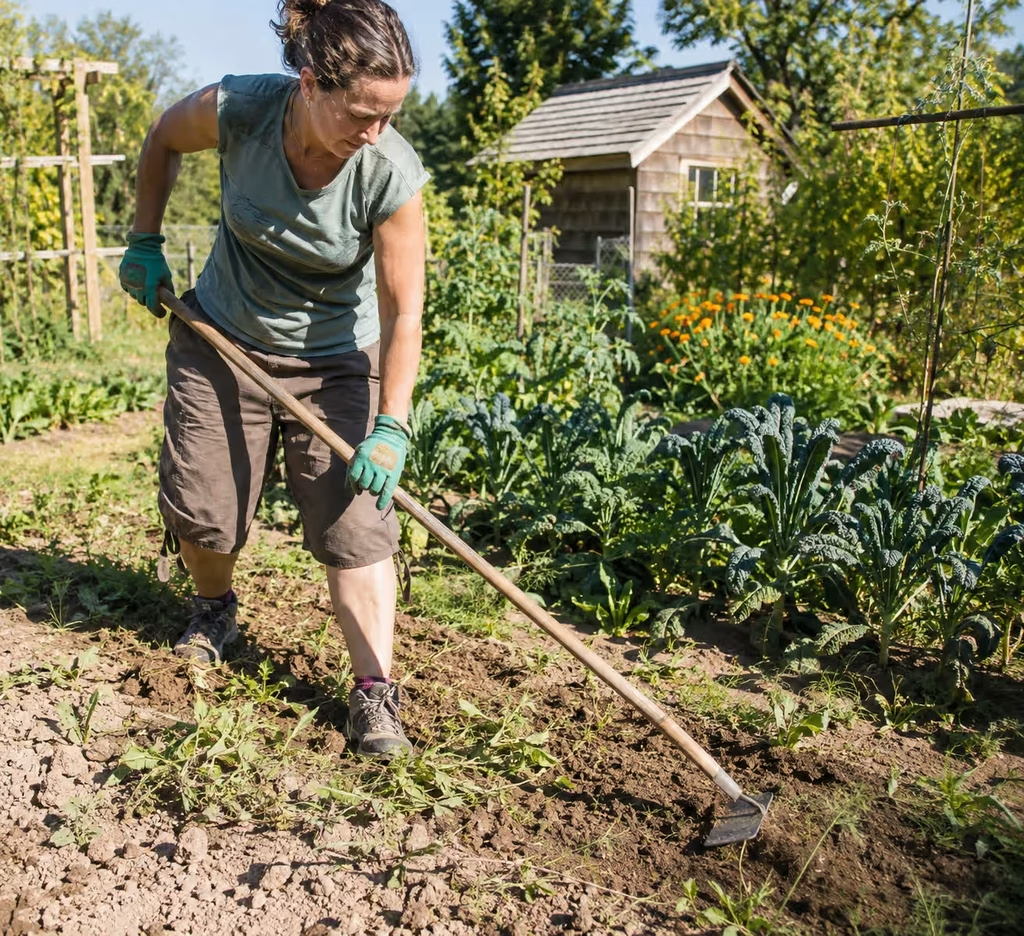
Using a Garden Hoe to Clear Weeds
What Is a Garden Hoe?
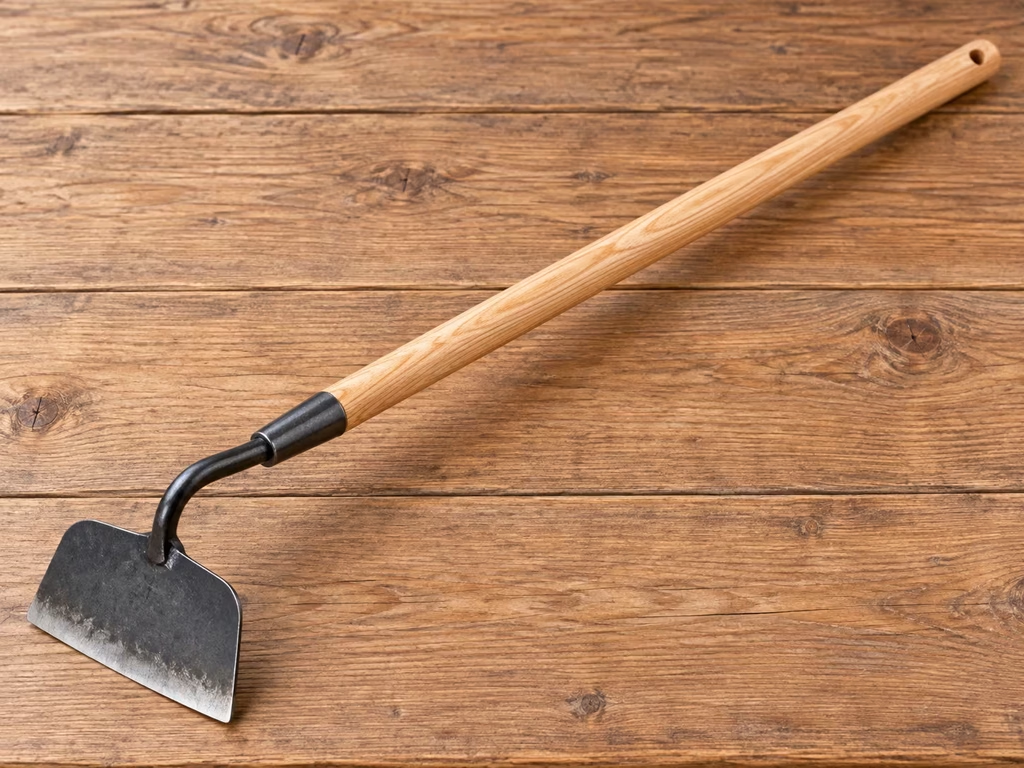
A garden hoe is a hand tool made up of a long handle and a flat or curved blade set at an angle to that handle. It’s one of the oldest agricultural tools in existence — versions of it were used in ancient Egypt and Sumer long before the plow existed, and the basic design hasn’t changed all that much since.
At its core, a hoe does two jobs: it breaks up and shapes soil, and it cuts weeds off at or just below the root. The long handle means you can do both while standing upright, which is the main reason a hoe is easier on your back than a hand trowel or a hand fork for large areas.
If someone asks “what is a garden hoe used for,” the short answer is: weeding, cultivating (loosening soil), making furrows for seeds, hilling soil around plants like potatoes, and general bed prep before planting. The exact technique — and how well it works — depends heavily on which type of hoe you’re holding, which is where most beginners get tripped up.
want to know about wedding
Anatomy of a Garden Hoe
Types of Garden Hoes: Which One Is Which
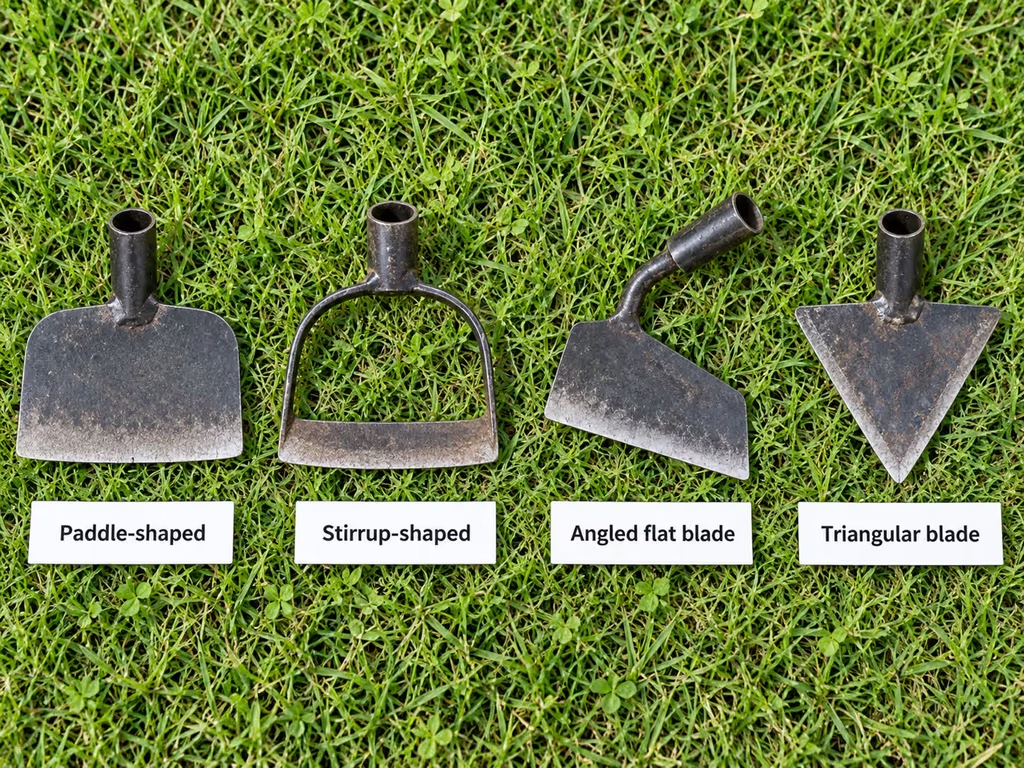
Not every hoe is built for the same task, and this is the single biggest source of confusion for new gardeners. Here are the styles you’ll actually run into:
- Draw hoe (paddle hoe): The classic shape most people picture — a rectangular paddle set at roughly 90 degrees to the handle. Used in a chopping or pulling motion. Good all-rounder for weeding, mounding soil, and breaking up small clods.
- Dutch hoe (push hoe): Has a flat, sharp blade angled so it skims just under the soil surface as you push it forward. Excellent for slicing weeds off at the root without disturbing much soil, and it’s used standing upright, so it’s gentler on the back.
- Stirrup hoe (scuffle, hula, or loop hoe): Named for its stirrup-shaped, double-edged blade that pivots slightly. Worked with a back-and-forth push-pull motion, it cuts weeds on both strokes, making it one of the fastest tools for clearing an already-planted bed.
- Collinear hoe (onion hoe): A narrow, thin, very sharp blade that rides parallel to the soil. Built for precision weeding between closely spaced plants like onions, carrots, or lettuce without slicing the crop by accident.
- Warren hoe: Has a triangular, pointed blade — this is the “triangle garden hoe” people search for. It’s designed for cutting furrows for seeds and hilling soil around plants like potatoes, rather than general weeding.
- Flat hoe: A broad, flat blade used mainly for surface weeding and light soil leveling. Great for open ground where you’re clearing a wide area quickly.
- Handheld (mini) hoe: A short-handled version for raised beds, containers, and tight spaces where a full-length hoe is overkill.
- Japanese hoe (hoe-kama style): Often lighter and more precise than Western hoes, frequently combining a hoe edge on one side with a small cultivating fork or serrated edge on the other — popular for detailed bed work.
- Heavy-duty / digging hoe: A thicker, heavier blade angled around 45 degrees, built for chopping through sod, compacted soil, or new ground that’s never been cultivated. This is the one to reach for if you’re breaking new garden beds rather than maintaining existing ones.
Knowing these names matters because “best garden hoe” genuinely depends on the job — a stirrup hoe that’s brilliant for weeding an established vegetable row will struggle against compacted clay that a heavy-duty draw hoe would chop through easily.
Comparing Garden Hoe Types
Garden Hoe vs. Other Garden Tools
People often search “garden hoe” when what they actually need is a different tool entirely. Here’s how it stacks up against its closest relatives:
| Tool | Best For | Handle Length | Effort Level | Precision |
|---|---|---|---|---|
| Garden Hoe | Weeding, cultivating, furrows | Long (standing use) | Low–Medium | Medium |
| Hand Trowel | Digging small holes, transplanting | Short (kneeling) | Low | High |
| Cultivator/Tiller | Loosening large areas of soil | Long or motorized | Medium–High | Low |
| Garden Fork/Pitchfork | Turning soil, lifting root crops | Long | Medium | Low |
| Mattock | Breaking hard/rocky ground, roots | Long | High | Low |
| Hand Fork | Detail weeding in tight spots | Short (kneeling) | Low | High |
If your ground is soft and mostly established, a hoe wins on speed and comfort. If you’re starting a brand-new bed on compacted, rooty ground, a mattock or heavy digging hoe will save you a lot of frustration.
What a Garden Hoe Is Actually Used For
- Slicing weeds off at the root before they set seed
- Cultivating (loosening the top few inches of soil for better water and air penetration)
- Creating furrows for sowing seeds in straight rows
- Hilling soil up around crops like potatoes, corn, and leeks
- Breaking up small clods after tilling, ahead of planting
- Edging and tidying the border between beds and paths
- Light aeration around established plants without disturbing roots
Who Should Use a Garden Hoe
- Vegetable gardeners who need to keep rows weed-free through the growing season
- New gardeners breaking ground for their first raised bed or in-ground plot
- Homeowners maintaining flower beds, borders, and pathways
- Anyone with back or knee issues who wants a standing alternative to hand weeding
- Allotment and community garden growers covering larger areas regularly
- Hobby farmers hilling root crops or maintaining long rows without a motorized tiller
If your gardening is limited to a couple of pots on a balcony, you probably don’t need one — a hand fork or trowel will do. Once you’re managing actual beds or rows, a hoe earns its space in the shed fast.
Choosing the Right Garden Hoe
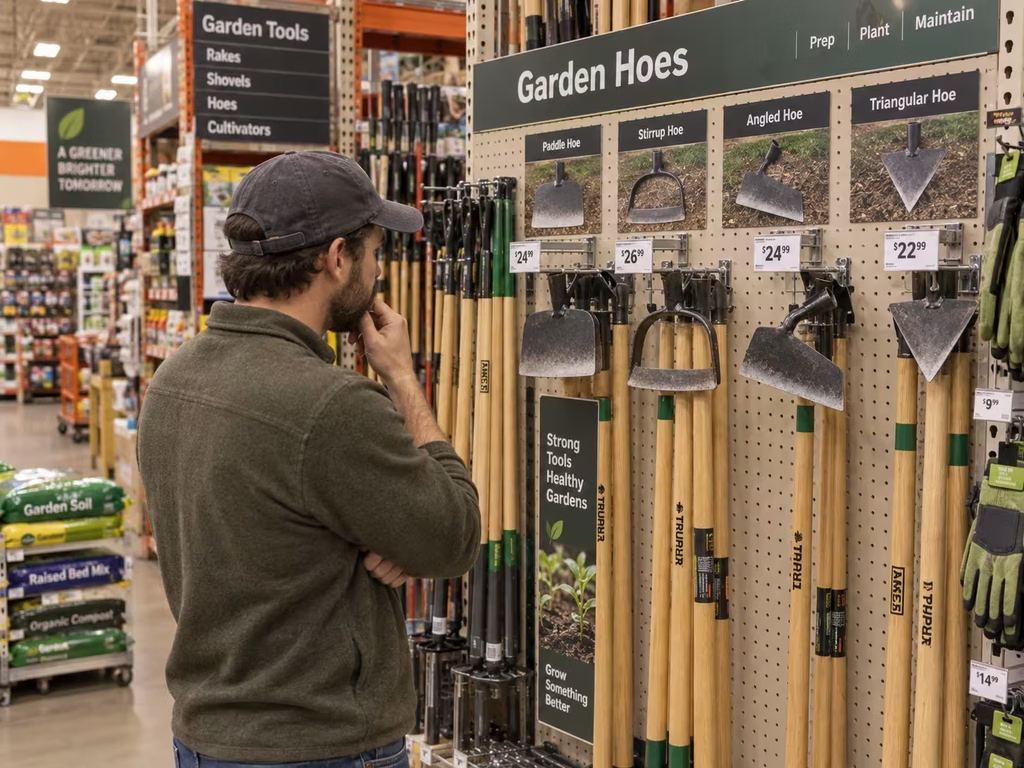
How to Choose the Right Garden Hoe (Step by Step)
- Identify your main task first. Weeding an existing bed calls for a stirrup or Dutch hoe. Breaking new, hard ground calls for a heavy-duty draw hoe or mattock-style blade. Making furrows for seeds calls for a Warren hoe.
- Match the blade width to your space. Wide flat blades clear open ground fast; narrow collinear or handheld hoes are better for tight rows between delicate plants.
- Check the handle length against your height. A handle that’s too short forces you to stoop, which defeats the main ergonomic advantage of a hoe. Stand the hoe upright next to you — the top should sit roughly between your chest and chin.
- Consider the handle material. Wood (ash or hickory) absorbs shock well and is easy to replace; fiberglass is more weather-resistant; steel is nearly indestructible but heavier and can transmit more vibration to your hands.
- Test the weight before buying if possible. A heavier head chops through tough soil more easily but tires your arms faster over a long session — go lighter if you have a large area to cover in one sitting.
- Decide if you need a specialty hoe or a general one. If you only want one hoe for everything, a mid-weight draw or paddle hoe is the safest all-rounder. If you already own a general hoe, a stirrup or collinear hoe makes a great precision second tool.
- Set a budget based on how often you’ll use it. Occasional gardeners can go with a mid-range option from Lowe’s, Walmart, or Ace Hardware; frequent or professional use justifies investing in a forged-steel, hand-forged, or branded option (Ames, Corona, and similar brands are common choices) that will hold an edge and survive years of use.
- Check the warranty and replacement handle availability. Wooden handles eventually crack or splinter — buying a hoe with a widely available replacement handle saves you from replacing the whole tool later.
How to Use a Garden Hoe
- Choose dry, warm ground when possible. Weeds cut on a dry day wilt and die on the surface quickly; cutting them in wet soil often lets them re-root.
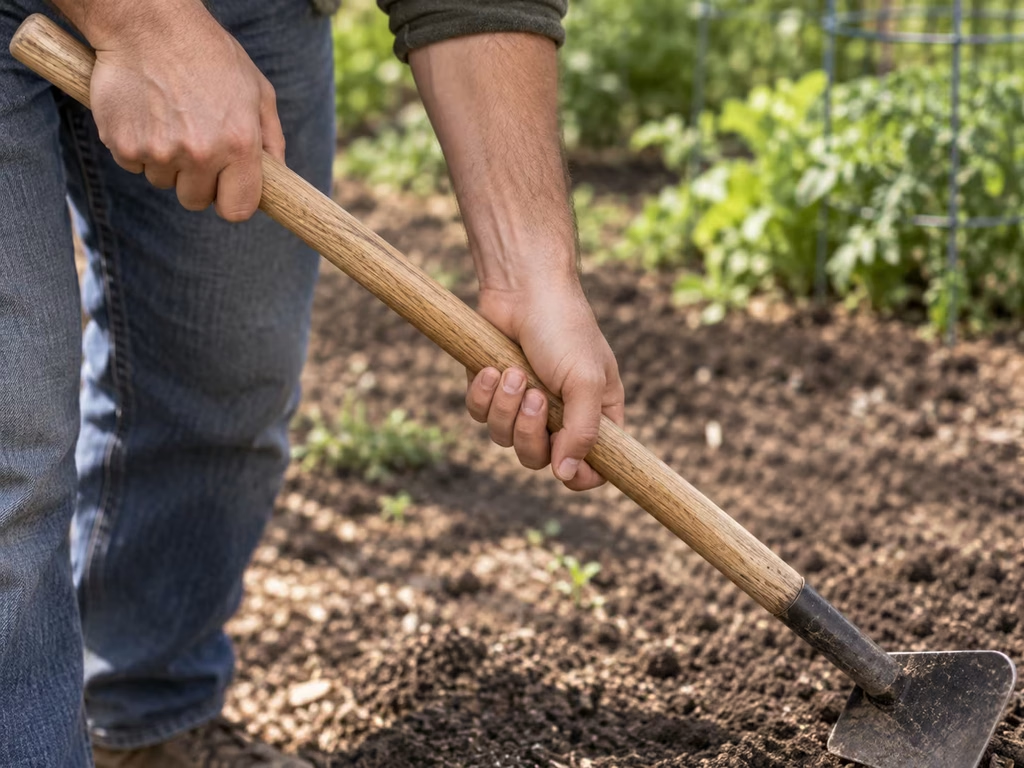
- Grip the handle with both hands, one near the top and one about a third of the way down, similar to holding a broom.
- Keep your back straight and let the tool, not your spine, do the bending.
- For weeding with a draw or paddle hoe, use a chopping motion, angling the blade to slice just under the weed’s crown.
- For a stirrup or Dutch hoe, use a smooth push-pull or back-and-forth motion, keeping the blade skimming just below the soil surface.
- For hilling with a Warren or pointed hoe, drag soil toward the base of the plant in short, controlled pulls rather than one long sweep.
- For making furrows, use the pointed edge or corner of the blade and walk backward slowly, keeping a straight line by eye or with a garden string as a guide.
- Work in manageable sections rather than trying to cover the whole bed in one go — this keeps your motion controlled and reduces fatigue-driven mistakes like clipping seedlings.
- Clear cut weeds off the bed if the soil is damp, so they don’t simply re-root where they fell.
Proper Grip and Technique
Maintenance and Care
- Wipe soil and moisture off the blade after every use to prevent rust
- Sharpen the cutting edge once or twice a season with a metal file for cleaner, easier cuts
- Rub a light coat of oil onto both the blade and a wooden handle periodically to prevent corrosion and cracking
- Store the hoe hanging or upright indoors, away from direct rain and sun
- Check the handle-to-head connection regularly and tighten or replace pins/rivets if they loosen
- Replace a cracked or splintered wooden handle before it snaps mid-use
- Avoid leaving the hoe blade-down in soil or grass between uses, which speeds up rust and dulling
Common Mistakes to Avoid
- Using the wrong hoe for the job — trying to break hard, compacted ground with a delicate collinear hoe will bend or dull the blade fast
- Bending at the waist instead of using the handle length — defeats the ergonomic point of the tool and strains your back
- Chopping too deep — most weeding only needs the top inch or two of soil disturbed; digging deeper damages nearby roots and wastes energy
- Skipping maintenance — a rusty, dull hoe requires far more effort and gives worse results than a clean, sharp one
- Buying based on price alone — a very cheap hoe often has a soft blade that bends on the first encounter with rocky or clay soil
- Ignoring handle length — an oversized or undersized handle for your height causes fatigue and poor control over a full session
- Leaving cut weeds on wet soil — they can re-root and undo your work
Frequently Asked Questions
What is a garden hoe used for? It’s mainly used for weeding, cultivating soil, making furrows for seeds, and hilling soil around growing plants like potatoes.
What’s the difference between a garden hoe and a grub hoe? A garden hoe is generally lighter and built for weeding and light cultivation, while a grub hoe (sometimes confused with a mattock) has a heavier, thicker blade meant for chopping roots and breaking hard or rocky ground.
What is the best garden hoe for weeding? For established beds, a stirrup (scuffle) hoe or a Dutch hoe is usually considered best, since both let you slice weeds at the root with minimal soil disturbance. For tight spacing between plants, a collinear hoe offers more precision.
Can a garden hoe be used on hard, compacted soil? A standard hoe struggles with truly compacted or rocky ground. A heavy-duty digging hoe or a mattock is better suited to breaking new ground before switching to a lighter hoe for maintenance.
How often should a garden hoe be sharpened? Once or twice a season for regular home use is generally enough, though a sharper edge always makes weeding noticeably easier and faster.
Where can I buy a garden hoe? Garden hoes are widely available at Home Depot, Lowe’s, Ace Hardware, Walmart, Tractor Supply, and Amazon, as well as from specialty tool brands that sell hand-forged or heirloom-quality options online.
Is a garden hoe the same as a rake? No — a rake is designed to gather loose material like leaves or level soil across the surface, while a hoe is designed to cut into the soil to weed, cultivate, or shape it.
Does the “hoe” spelled the same as the tool have another meaning in slang? Yes, in casual English slang “hoe” is also used as an unrelated, informal (and often offensive) term for a person. It has no connection to the gardening tool, and this article refers only to the physical garden implement.
Final Thoughts
A garden hoe earns its reputation as one of the most useful tools in any garden shed — but only when it’s the right hoe for the job at hand. Match the type to your task (weeding versus breaking new ground versus making furrows), choose a handle length that lets you work standing tall, and keep the blade clean and sharp, and you’ll get years of easy, effective use out of a tool that’s been helping gardeners for thousands of years. Whether you end up with a classic draw hoe, a fast-moving stirrup hoe, or a precise Dutch hoe, the right choice comes down to knowing exactly what you’re asking it to do.