🌿 Your trusted guide to choosing the best garden tools.

Pickaxe: What It Is, What It’s Used For, and How It Differs From a Mattock

You’ve picked a spot for a new fence post, a rose bush, or a drainage trench. You push your shovel in, put your full weight on it, and the blade bounces right back. The ground is baked clay, or packed gravel, or there’s an old concrete slab hiding an inch under the grass. Your wrists ache and you’ve barely made a dent.
want to know about blade bounces
That’s the exact moment the pickaxe was made for. It’s one of the oldest digging tools in human history, and it’s still the tool that wins when the ground refuses to give.
In this guide you’ll learn:
- what a pickaxe really is (and why so many people confuse it with a mattock)
- what a pickaxe is used for, in the garden, on a job site, and in the mine
- how to choose the right head, weight, and handle
- how to swing one safely without wrecking your back
- how to sharpen, repair, and replace a handle so the tool lasts for decades
Quick answer: A pickaxe is a long-handled hand tool with a heavy, T-shaped head. It usually has a pointed spike on one side and a flat chisel or adze-style blade on the other. It’s used to break up hard soil, rock, and old concrete. A mattock is its close cousin, built more for digging and cutting roots than for smashing hard ground.
Here for the Minecraft, Terraria, or Stardew pickaxe? You’re not lost. Jump to Pickaxe in Games vs Real Life for a quick answer, or keep reading to meet the real thing.
Before we dig in, one question for you: what are you trying to break, dig, or cut? Keep that answer in mind. We’ll use it in the “How to Choose” section to match you with the right tool.
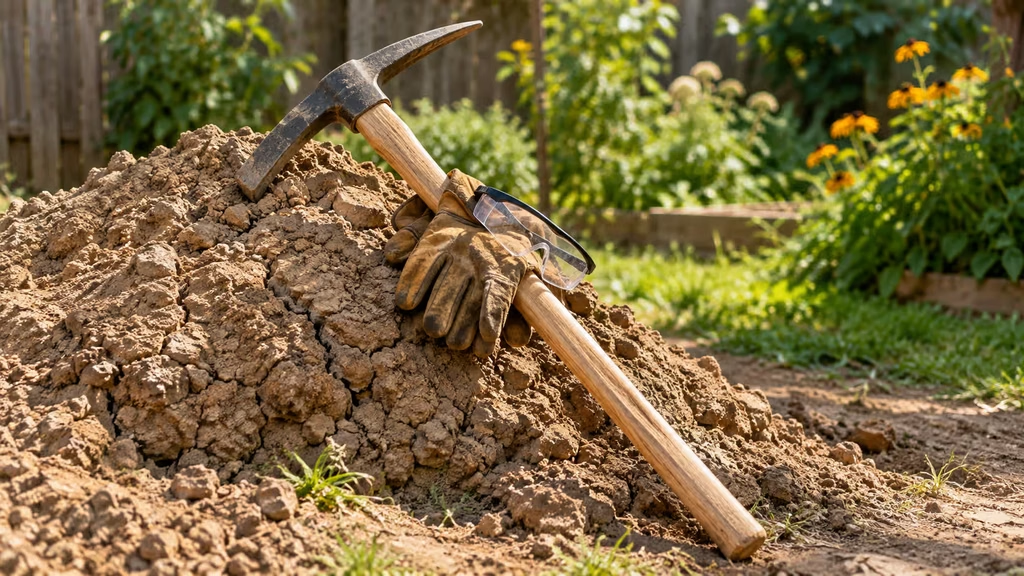
A Real Pickaxe Ready to Tackle Hard, Cracked Clay
What Is a Pickaxe?
A pickaxe (also spelled pick-axe, pickax in American English, or simply “pick”) is a T-shaped hand tool used for breaking and digging hard ground. The head is metal and sits perpendicular to a long handle. That handle was traditionally wood, is sometimes metal, and is increasingly fibreglass.
The classic head has a pointed end on one side and a broad, flat blade on the other. The head usually curves gently along its length, which helps the tip enter the ground at the right angle. A second common layout has two spikes, one slightly longer than the other.
Here’s a fun bit of word trivia. The “axe” in pickaxe is a spelling accident. The word comes from the Middle English picas, which traces back through Old French to Medieval Latin, and it’s linked to the Latin word for woodpecker. A modern pick isn’t really an axe at all. The spelling just drifted toward “axe” over the centuries.
Other names you’ll see:
- Pick or pickax: the shorter and American-style spellings
- Miner’s pick: a pick built for mining and quarrying
- Pick mattock: a pick on one side and an adze (a flat, horizontal blade) on the other
- Pico: the Spanish word for pickaxe (you’ll also hear zapapico)
A Very Short History of the Pick
People have been swinging picks for thousands of years. In prehistoric times, a large shed deer antler was cut down so one tine formed a single-pointed pick. Neolithic miners used antler picks to dig flint from underground, and sites like Grimes Graves in England have produced them. Later the metal pick became the standard tool for mining, quarrying, road building, and railway construction, and in medieval times it was even adapted as a weapon. Today the British Army’s Pioneer Sergeants still carry pickaxes, and the pick even has its own Unicode symbol (⛏).
From Antler Pick to Modern Steel: The Pickaxe Through Time

Pickaxe vs Mattock (and Other Look-Alike Tools)
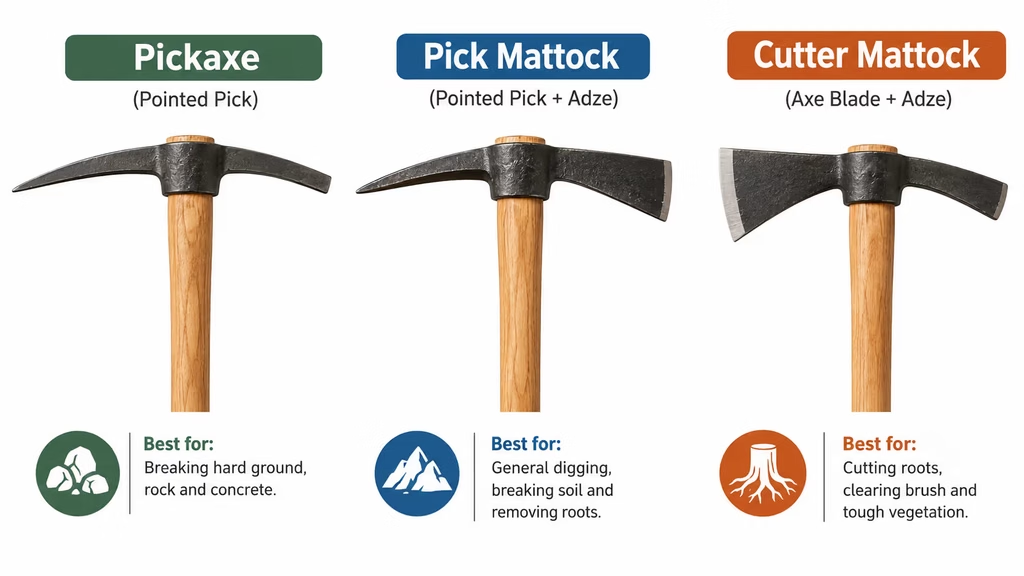
This is the most common question, so let’s clear it up honestly. The terms overlap. Many sellers use “pickaxe” and “mattock” as if they mean the same thing, and even reference books admit that a standard pickaxe is very similar to a “pick mattock.”
The practical difference comes down to the head:
- A pickaxe is built to penetrate and break: a pointed spike concentrates all the swing’s force into a tiny spot, which is perfect for hard, rocky, or compacted ground.
- A mattock is built to dig and cut: it pairs a flat, horizontal adze blade with either a pick (pick mattock) or a vertical axe blade (cutter mattock). That makes it better for mixed soil, sod, and roots.
Here’s how the whole family stacks up:
| Tool | Head design | Best for | Weak at |
|---|---|---|---|
| Pickaxe (standard) | Pointed spike + flat chisel-style blade, curved head | Breaking hard clay, rock, compacted gravel; prying | Fine soil work, cutting thick roots |
| Pick mattock | Pointed spike + horizontal adze | Break the ground, then pull the loosened soil, in one tool | Heavy rock and concrete |
| Cutter mattock | Vertical axe blade + horizontal adze | Roots, stumps, matted sod, trenching | Hard rock |
| Railroad pick | Slimmer, pointed head; often lighter | General breaking and trenching where a big head is overkill | Root cutting |
| Grub hoe | Broad, flat blade set at a right angle to the handle | Loosening soil, hoeing, grubbing out weeds; the name is sometimes used for a mattock in the US | Breaking rock |
| Pulaski | Axe blade + adze | Root cutting, firebreaks (a cutter mattock is very similar) | Hard, rocky ground |
| Rock pick (geologist’s hammer) | Small hammer face + pointed tip | Splitting and sampling rock, rockhounding | Digging |
Descriptions of the railroad pick vary between sources, so if you’re buying one, check the actual head shape and weight rather than the name.
So Which One Wins?
Think of it like this. If the ground is hard and rocky, the pickaxe wins. If the ground is full of roots, sod, and thick soil, the cutter mattock wins. If you want one tool that does a decent job at both, the pick mattock is the all-rounder.
One tip that experienced gardeners swear by: before you swing at compacted ground, soak it thoroughly. Not a splash from a watering can. Run the hose slowly for a good while and let the water sink in. Wet clay and compacted layers give way far more easily, which means fewer swings and less effort.
Quick self-check: Look at the ground you need to dig. Is it hard or tangled? Hard means pick. Tangled means cutter mattock. Both? Pick
Anatomy of a Pickaxe
Knowing the parts helps you buy smarter and repair faster. A pickaxe has just a few, but each one matters.
- Head: the heavy metal part, ideally forged and heat-treated steel. Most heads weigh roughly 3 to 7 lb (1.4 to 3.2 kg).
- Pick end (spike): the pointed tip that does the breaking and prying.
- Chisel or adze end: the flat blade on the opposite side, used for clearing loose material, chopping through roots, and skimming.
- Eye: the hole through the center of the head where the handle passes through.
- Handle (also called the haft or helve): usually about 3 to 4 ft (0.9 to 1.2 m) long. Ash and hickory are the classic woods because they absorb shock well. Fibreglass handles are increasingly common.
- Wedges: small wooden and sometimes steel wedges driven into the top of the handle to lock the head in place. If your head wobbles, this is where the problem usually is.
Pickaxe Anatomy: Every Part and What It Does

What Is a Pickaxe Used For?
The short answer is: anything where the ground is too hard for a shovel. Here’s the longer, more useful version.
- Breaking compacted or clay soil: the spike punches through the hard layer so your shovel can do the rest.
- Digging in rocky ground: the point works between and under stones, and the handle gives you leverage to pry them loose.
- Digging planting and post holes in stony soil: loosen first with the pick, then clear with a shovel.
- Trenching: for drainage, irrigation pipes, or cables where the soil is tough.
- Breaking up old, thin concrete or asphalt: a pick can crack an older, unreinforced slab or a bad patch of pavement. For thick or reinforced concrete, use a rented breaker instead. It’s faster and far kinder to your body.
- Prying out rocks and stumps: the spike goes under, the handle does the lifting.
- Cutting roots (with the chisel or adze end): handy when you meet a root you can’t avoid.
- Mining, quarrying, and railway work: the pick’s original job, and still used for small-scale work where machines can’t reach.
A small pickaxe (also called a mini pickaxe or hand pickaxe) works on the same principle at a smaller scale. It’s used for tight spots, container work, rock collecting, and fine loosening of hard soil around plants. A geologist’s rock pick belongs to this group too.
What a pickaxe is not good at: precision digging, mixing compost, or turning loose garden beds. For those, reach for a digging fork or a spade.
Breaking Hard Ground: The Pickaxe at Work

Who Should Use a Pickaxe?
A pickaxe isn’t only for miners in old films. It’s a genuinely useful tool for:
- Gardeners with clay or stony soil: especially when creating new beds or planting trees and shrubs.
- Landscapers: for grading, trenching, and breaking through compacted subsoil.
- Fence builders and DIYers: for post holes in hard ground.
- Plumbers, electricians, and irrigation installers: for trenches where a machine can’t fit.
- Farmers and homesteaders: for clearing rocks and breaking hardpan.
- Hobby miners, prospectors, and rockhounds: especially with a small pick or rock pick.
Who should think twice? If you have back, shoulder, or wrist problems, a heavy pick may not be the right tool for you. Consider a lighter head, shorter sessions, or hiring the job out. And if your soil is soft and loose, you simply don’t need one.
How to Choose the Right Pickaxe
Remember the question from the start of this guide: what are you trying to break, dig, or cut? Now let’s turn the answer into a shopping list.
- Match the head to the ground. Hard, rocky, or compacted ground calls for a standard pickaxe or pick mattock. Roots and sod call for a cutter mattock. Mixed jobs call for a pick mattock.
- Pick a weight you can actually swing. A lighter head you can swing fifty times beats a heavy one you can swing ten times. Many home gardeners do well with a head around 3 to 5 lb. Heavier heads suit hard, repeated breaking work if you’re strong and used to it.
- Check handle length and material. A handle around 36 inches (90 cm) suits most adults. Hickory and ash absorb shock and can be replaced. Fibreglass is durable and weather-resistant but harder to repair in a home workshop.
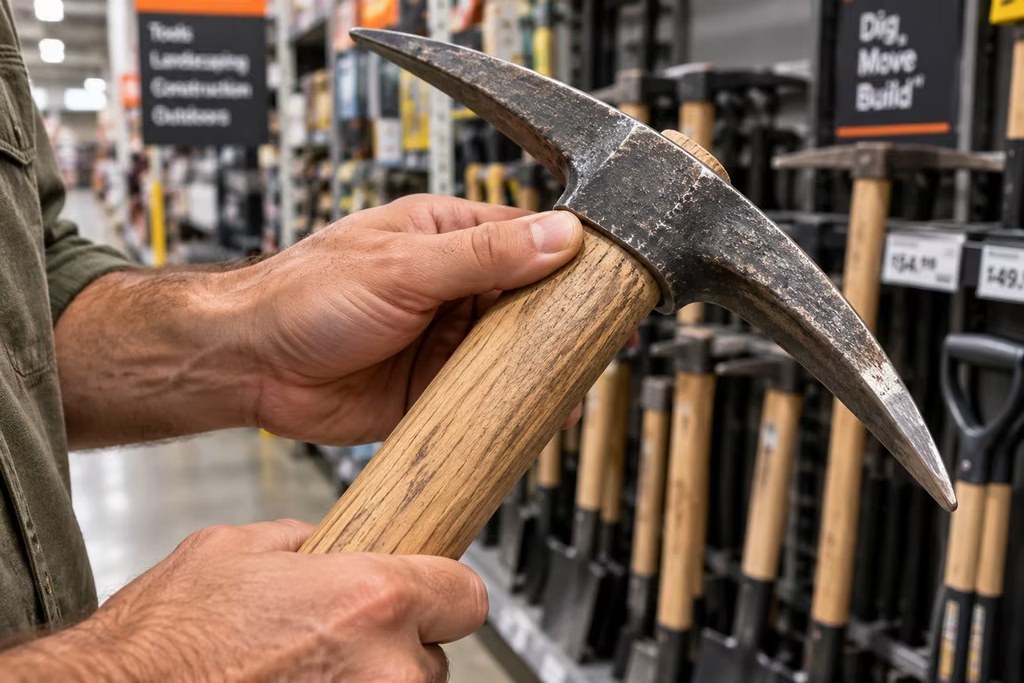
- Inspect the head steel. Look for forged, heat-treated steel rather than thin, stamped metal. The spike should be solid, symmetrical, and free of cracks or chips.
- Test the head fit. The head must sit tight on the handle, with no wobble and no visible gaps around the eye. Check that wedges are seated.
- Decide on size. For small spaces, containers, and rock collecting, a mini or hand pickaxe is easier to control than a full-size one.
Match-up table: find your best fit
| If your main job is… | Look for… |
|---|---|
| Breaking hard clay or rocky soil | Standard pickaxe or pick mattock, 4 to 6 lb head |
| Cutting roots and sod | Cutter mattock |
| A bit of everything in a home garden | Pick mattock, lighter head, 36-inch handle |
| Tight spaces and container work | Mini pickaxe or hand pick |
| Rock collecting or sampling | Geologist’s rock pick |
| Heavy, repeated site work | Forged head, hickory handle, replaceable parts |
Where to buy: hardware stores, farm supply shops, and big-box retailers all stock picks and mattocks, and online stores carry a wider range. When you’re searching for a pickaxe for sale, always check the head weight, handle material, and how the head is attached. Photos of the eye area tell you a lot.
Thinking about a vintage or antique pickaxe? They look great on a workshop wall and many are solid tools. Before using one for real work, check for deep rust pitting, cracks around the eye, and a rotten handle. A new handle can bring a good old head back to life.
How to Inspect a Pickaxe Before You Buy
How to Use a Pickaxe Safely and Effectively
A pickaxe is simple to use, but it’s a heavy tool with a sharp point. A few minutes of preparation prevents most accidents.
Before You Swing: Safety Checklist
- Call before you dig. Buried gas, water, and electric lines are real. In the US you can call 811. Elsewhere, contact your local utility locator service.
- Wear the right gear: safety glasses, sturdy gloves, closed-toe work boots (steel toe if you can), and long trousers.
- Protect your lungs. If you’re breaking concrete or masonry, wear a dust mask or respirator and dampen the area. Masonry dust can contain silica.
- Clear the space. Keep people and pets well back. Check for overhead branches and wires that could catch your swing.
- Inspect the tool. Give the head a firm twist. If it moves at all, fix it before you start.
Step-by-Step Technique
- Wet the ground first (if it’s dry and hard). Soak it well and wait. It makes a big difference.
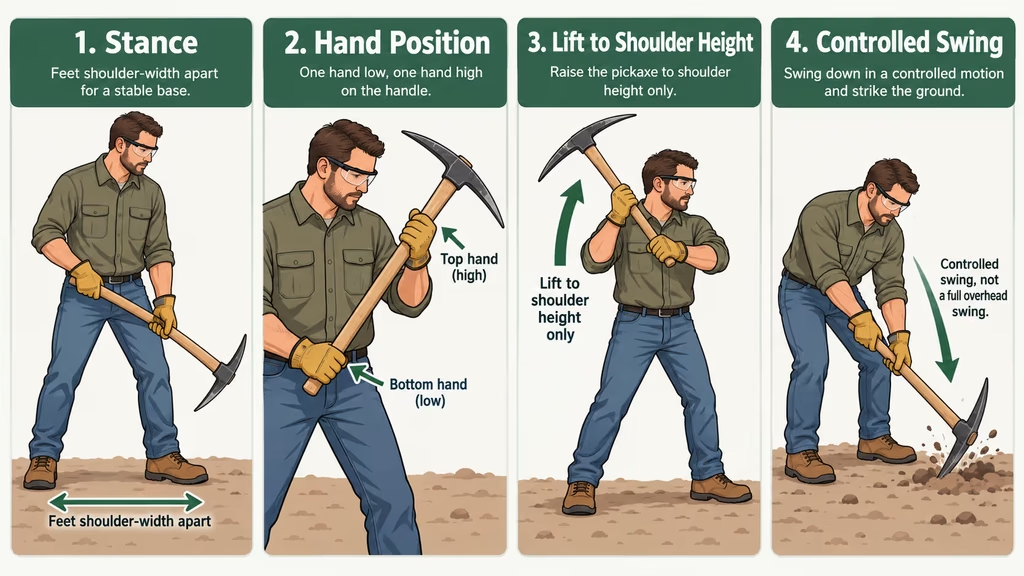
- Take a stable stance. Feet about shoulder-width apart, knees slightly bent, weight balanced.
- Grip low and high. One hand near the bottom of the handle for control, the other a little higher for guidance. Slide the upper hand down as the head comes down.
- Lift, don’t heave. Bring the pick up to about shoulder height or slightly above. You don’t need a huge windup. Let the weight of the head do the work.
- Swing in a smooth arc. Aim for the spot you want to break. Keep the swing path away from your legs and feet.
- Work in layers. Break a few inches, then clear the loosened soil with a shovel or the adze end. Repeat. Trying to go deep in one go wastes energy.
- Use the handle as a lever. Once the spike is in, rock the handle gently to crack the ground. Don’t yank sideways with all your strength.
- Free a stuck pick carefully. Push the handle forward a little and pull it back toward you. If it’s still stuck, lower the handle so it’s parallel to the ground and rock it gently side to side.
- Rest often. Fatigue is the real hazard. When your form gets sloppy, take a break, drink water, and start again.
Pro tip: aim for cracks, seams, and softer spots. The pick loves a weakness. And two 30-minute rounds beat one exhausting hour.
Safe Pickaxe Stance and Grip in Four Frames
Maintenance and Care
A good pickaxe can outlast its owner if you treat it right. The routine is short.
- Clean it after every use. Knock off mud and scrub it with a stiff brush. Dry it fully.
- Oil the metal. A thin coat of light oil on the head stops rust.
- Oil the wood. Rub boiled linseed oil into a wooden handle once or twice a year so it doesn’t dry out and split.
- Sharpen the working edges. Use a mill file. Restore the pick’s point and keep the original shape. It should be pointed, not razor sharp. Sharpen an adze or axe-style edge as you would an axe.
- Check the head fit often. If it wobbles, tighten it or re-wedge it right away. A loose head is dangerous.
- Inspect the handle. Look for cracks, splits, and deep gouges near the head.
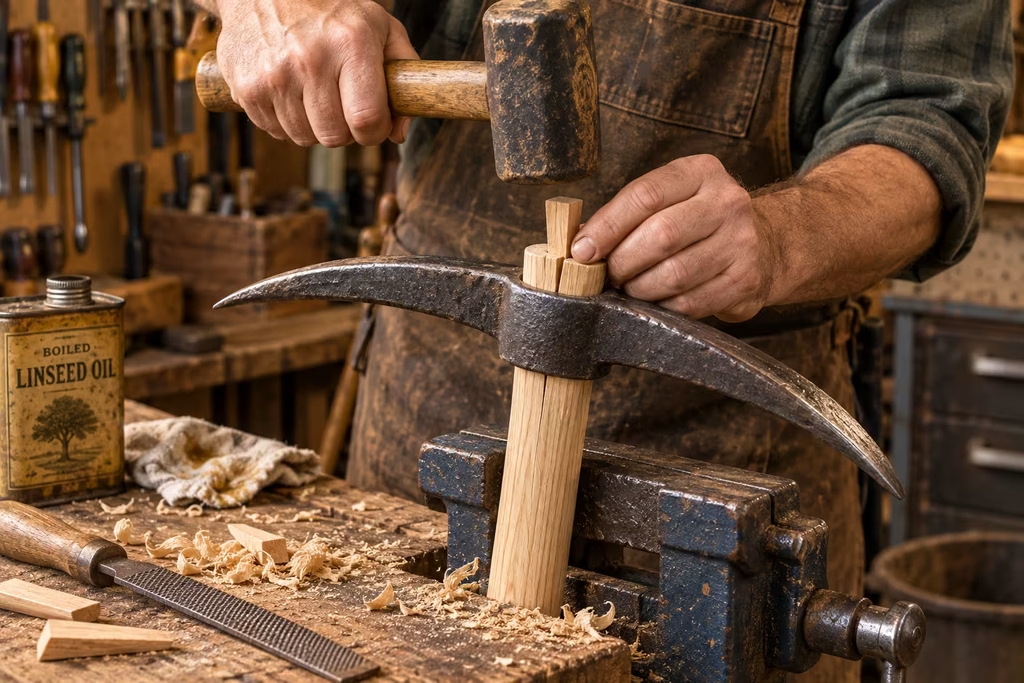
How to Replace a Pickaxe Handle
Handles break, especially when a swing hits a rock. Replacing one is a very doable weekend job.
- Remove the old handle. Saw off the handle flush with the head, then drill or drive out the remaining wood from the eye. Avoid burning it out, since strong heat can soften the steel.
- Clean the eye. Remove all wood fragments and rust.
- Test-fit the new handle. Choose a straight-grained hickory or ash handle. Shave the top with a rasp until it slides into the eye with a snug fit.
- Seat the head. Tap the bottom of the handle on a firm surface so the head slides down and locks on.
- Add wedges. Drive a wooden wedge into the slot at the top of the handle. Add a steel cross-wedge if you have one for extra grip.
- Trim and seal. Cut off any excess wood, then rub linseed oil into the new handle and the top end grain.
For fibreglass handles, follow the manufacturer’s instructions, because many use epoxy or special fittings.
Replacing a Pickaxe Handle: Fit, Seat, Wedge
Common Mistakes to Avoid
- Using a pickaxe on soft, loose soil. You’re using a sledgehammer to crack a nut. A spade or fork is faster.
- Swinging for the fences. Big windups tire you out and reduce accuracy. Let the weight work.
- Skipping safety glasses. Stone and soil chips fly off surprisingly fast.
- Ignoring buried utilities. One wrong strike can cost far more than the delay of checking first.
- Prying sideways with all your strength. That’s how handles snap.
- Digging deep in one go. Work in layers.
- Buying the heaviest one “to be safe.” A heavy head you can’t control is a hazard, not a bonus.
Pickaxe in Games vs Real Life
Plenty of people search “pickaxe” because of a game. Here’s a quick answer so you’re not left hanging.
In Minecraft, you craft a pickaxe at a crafting table using three matching materials across the top row and two sticks down the middle. Roughly speaking, iron or better can mine diamonds, and a gold pickaxe cannot mine iron or diamonds. Durability climbs from wood to netherite, with a diamond pickaxe lasting 1,561 uses and netherite 2,031.
In other games like Terraria, Stardew Valley, Valheim, RuneScape, and The Forge, the pickaxe is a progression tool, and each game has its own upgrade path. Those details change with game updates, so check the game’s official wiki for the latest.
In real life, there’s no such thing as a practical solid-diamond pickaxe. Diamond is extremely hard but brittle, so it would chip under impact. Diamond is used in drill bits and cutting tools, but a real pick for real digging is forged steel.
Frequently Asked Questions
What is a pickaxe used for? A pickaxe is used to break up hard ground, rock, and old concrete, to pry out stones, and to dig in soil that a shovel can’t penetrate. The chisel or adze end also cuts roots and clears loosened soil.
What’s the difference between a pickaxe and a mattock? A pickaxe has a pointed spike for breaking hard ground. A mattock has a flat, horizontal adze blade, paired with either a pick (pick mattock) or an axe blade (cutter mattock), and is better for digging and root work. The terms overlap, and a standard pickaxe is very similar to a pick mattock.
What’s the best pickaxe for hard clay soil? A standard pickaxe or pick mattock with a 4 to 6 lb forged head and a 36-inch hickory handle is a strong choice for most people. Soak the clay first to make the job easier.
How heavy should a pickaxe be? Heads commonly weigh between 3 and 7 lb (1.4 to 3.2 kg). Choose a weight you can swing comfortably and with control for a full session.
Can a pickaxe break concrete? It can crack old, thin, unreinforced concrete or asphalt. Thick or reinforced slabs are better handled with a demolition hammer. Always wear eye and lung protection.
How do I fix a loose pickaxe head? Re-seat the head and drive in or replace the wedges. If the handle is cracked or the eye is worn, replace the handle. Don’t rely on soaking a wooden handle in water. It only tightens the fit temporarily.
Is there a real diamond pickaxe? Not for digging. Diamond-tipped tools exist for drilling and cutting stone, but a solid diamond pickaxe would chip under impact and isn’t practical.
Was the pickaxe used as a weapon? Historically, yes. The pick was adapted as a weapon in ancient and medieval times, but today it’s strictly a work tool.
How do you say pickaxe in Spanish? Pico is the standard word. You’ll also hear zapapico in some regions.
Final Thoughts
The pickaxe hasn’t changed much in thousands of years, and that’s the best compliment you can give a tool. It’s simple, tough, and brilliant at one thing: breaking ground that nothing else will. Choose the right head for your soil, pick a weight you can control, respect the safety basics, and it’ll serve you for a lifetime.
Now it’s your turn. What’s the toughest ground you’ve ever had to dig? Did a pickaxe, a mattock, or something else save the day? Share your story in the comments. Your tip might be exactly what another reader needs.
Ready to compare more digging tools? Check out our guide to the mattock next to see whether the flat blade might suit your soil better.
Show Image
Image heading: Job Done: Hard Ground, Broken
Alt text: Finished garden trench with a pickaxe and shovel resting beside it at sunset
AI image prompt: Warm, satisfying photo of a neatly dug garden trench in stony soil with a pickaxe and shovel leaning beside it, soft golden-hour light, slight dust in the air, 16:9
SEO Notes (for editor only, do not publish)
Primary keyword: pickaxe Secondary keywords used: what is a pickaxe used for, pickaxe vs mattock, mattock pickaxe, pickaxe handle, how to repair a pickaxe, small/mini pickaxe, hand pickaxe, garden pickaxe, pickaxe for sale, real pickaxe, diamond pickaxe real life, mining pickaxe, miner’s pickaxe, vintage/antique pickaxe, pickaxe in Spanish, pickaxe weapon, best pickaxe
NLP semantic entities covered: pick mattock, cutter mattock, railroad pick, grub hoe, adze, Pulaski, rock pick / geologist’s hammer, eye, haft/helve, wedge, hickory, ash, fibreglass, forged steel, antler pick, Grimes Graves, Neolithic, Pioneer Sergeant, Unicode ⛏, 811 (call before you dig), silica dust, hardpan, compacted soil, clay, trenching, sod
Content gaps filled vs ranking pages: safety and utility-line checklist, step-by-step handle replacement, “how to choose” by ground type with a match-up table, soak-the-soil tip, vintage pickaxe inspection, concrete-breaking limits, small/mini pick section, real-life diamond pickaxe myth, clear gaming redirect.
Suggested schema: Article + FAQPage (use the FAQ section) + optional HowTo (How to Use / Replace a Handle).
Internal link ideas: mattock guide (anchor: “mattock”), digging fork / garden fork guides (anchor: “digging fork”), hand tools buying guide.
Suggested next article: a separate Minecraft pickaxe guide to capture the game-related keywords from this list.